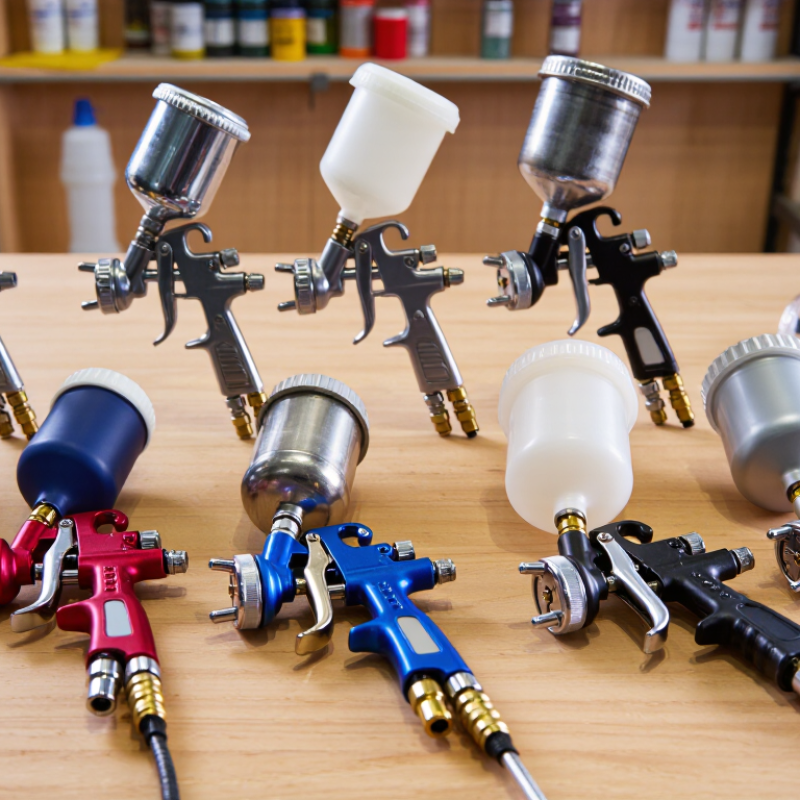
| 1 | HVLP Gravity-Feed Gun | Cup above the air cap; high-volume, low-pressure atomization | 20–50 psi inlet; about 10 psi at the air cap | 1.3–2.0 mm | Water-based paint, solvent-based enamel, clear coat, stain, and thinned primer | Furniture, cabinets, doors, trim, and general workshop projects | Good transfer efficiency, low overspray, and easy material control | Needs a relatively large compressor and may require material thinning |
| 2 | LVLP Gravity-Feed Gun | Cup above the air cap; low-volume, low-pressure atomization | 15–30 psi inlet; approximately 3–5 cfm air demand | 1.0–1.8 mm | Thin to medium coatings, stains, lacquers, enamel, and reduced water-based paint | DIY furniture refinishing, small vehicles, metal parts, and home repairs | Works with smaller compressors and produces relatively low overspray | May struggle with thick coatings and can atomize less evenly at very low pressure |
| 3 | Conventional Siphon-Feed Gun | Cup below the gun; compressed air draws material into the nozzle | 35–60 psi inlet pressure | 1.4–2.5 mm | Primers, enamels, lacquers, stains, and moderately thick coatings | General metalwork, machinery, agricultural equipment, and large workshop items | Simple operation, strong atomization, and good tolerance for varied materials | Higher overspray and lower transfer efficiency than HVLP or LVLP systems |
| 4 | Airless Spray Gun | High-pressure fluid pump; no compressed-air atomization | 1,000–3,000 psi fluid pressure | 0.011–0.021 in. reversible tip | Latex wall paint, acrylic coatings, elastomeric coatings, primers, and some stains | Walls, ceilings, fences, siding, decks, and large surfaces | Very fast coverage and can spray many materials without extensive thinning | Creates more overspray, requires careful pressure control, and needs thorough cleaning |
| 5 | Air-Assisted Airless Gun | High-pressure fluid delivery combined with a small air stream | 300–1,000 psi fluid; 20–40 psi air | 0.009–0.017 in. tip | Industrial enamel, lacquer, primer, polyurethane, and protective coatings | Production furniture, millwork, doors, cabinets, and metal components | Higher productivity than conventional air spray with improved finish control | More expensive and complex; requires correct pump, tip, and pressure setup |
| 6 | Turbine HVLP Gun | Dedicated turbine supplies warm, low-pressure air directly to the gun | 5–10 psi at the air cap, system-dependent | 1.3–2.5 mm | Stain, lacquer, clear coat, enamel, and thinned acrylic paint | Indoor DIY projects, furniture, cabinetry, trim, and small woodworking shops | Does not require a separate compressor and offers consistent low-pressure spraying | Warm air can affect some coatings; thicker materials usually need thinning |
| 7 | Detail or Touch-Up Gun | Small gravity cup and narrow fan for controlled spot application | 20–35 psi inlet pressure | 0.8–1.2 mm | Thin primer, color coat, lacquer, stain, and small quantities of enamel | Spot repairs, model work, small furniture, bicycle parts, and narrow surfaces | Excellent control, low material consumption, and compact handling | Small coverage area and limited ability to spray thick or heavily filled products |
| 8 | Pressure-Feed Spray Gun | Pressurized remote pot or tank continuously feeds material to the gun | 20–40 psi atomizing air; 5–30 psi pot pressure | 1.4–2.5 mm | Primers, high-build coatings, adhesives, enamels, and larger-volume finishes | Large panels, vehicle bodies, industrial parts, and extended spray sessions | Reduces cup refills and handles heavier materials more effectively | More setup and cleaning work; excessive pot pressure can cause runs and waste |
| 9 | Texture or Hopper Gun | Large hopper and wide orifice for coarse, high-solids materials | 25–60 psi, depending on texture density | 3.0–8.0 mm | Acoustic texture, drywall joint compound, masonry coatings, and heavy-bodied finishes | Ceilings, interior texture patterns, patching compounds, and decorative wall finishes | Handles coarse materials that would clog conventional finishing guns | Produces a textured finish rather than a fine cosmetic finish; frequent cleaning is essential |
| 10 | Electrostatic Spray Gun | Electrically charges coating particles to attract them to grounded workpieces | 20–40 psi atomizing air; voltage varies by system | 1.0–1.8 mm | Conductive solvent-based or water-based coatings formulated for electrostatic use | Metal frames, railings, machinery, appliances, and conductive fabricated parts | Can improve wraparound coverage and reduce coating waste on suitable metal parts | Requires grounding, compatible coatings, electrical safety procedures, and controlled surroundings |

.svg)