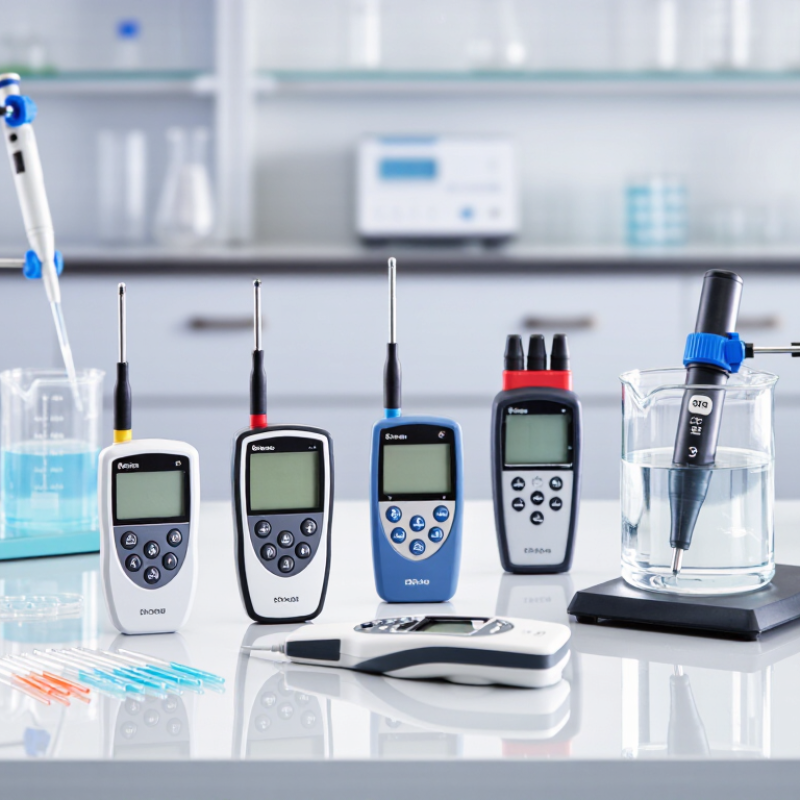
| 1. Basic Pocket Meter | Routine aquarium, hydroponic, and tap-water checks | 0.00–14.00 | ±0.10 pH | 0.01 pH | 2 points | Manual or limited ATC | Usually IP67 | Rinse after each use; store the sensing tip moist in storage solution; calibrate weekly during frequent use. | Slow readings often indicate a dry electrode, dirty junction, or exhausted batteries. | 6–18 months | ★★★☆☆ |
| 2. Replaceable-Probe Pocket Meter | Users who want lower long-term ownership cost | 0.00–14.00 | ±0.05 pH | 0.01 pH | Up to 3 points | Automatic temperature compensation | Commonly IP67 | Replace the probe when response remains slow after cleaning and conditioning; use fresh calibration buffers. | Calibration drift can result from contaminated buffer, clogged reference junction, or probe aging. | 12–24 months | ★★★★☆ |
| 3. General-Purpose Handheld Meter | Pools, drinking water, laboratories, and field sampling | 0.00–14.00 | ±0.02 pH | 0.01 pH | 1–3 points | Automatic, typically 0–100 °C | Often IP67 | Inspect the cable and connector; rinse with purified water; verify calibration before critical measurements. | Unstable values may be caused by electrical interference, insufficient sample mixing, or air bubbles on the bulb. | 18–36 months | ★★★★☆ |
| 4. Laboratory Benchtop Meter | High-accuracy testing and repeatable laboratory workflows | −2.00–16.00 | ±0.01 pH | 0.001–0.01 pH | Up to 5 points | Automatic with separate temperature probe | Not normally water-resistant | Use quality buffers, maintain a stable sample temperature, clean the electrode routinely, and document calibration slope. | Incorrect slope usually points to old buffers, poor electrode conditioning, temperature mismatch, or a failing probe. | 24–48 months | ★★★★★ |
| 5. Waterproof Field Meter | Outdoor sampling, wastewater checks, and wet work areas | 0.00–14.00 | ±0.02 pH | 0.01 pH | 2–3 points | Automatic | IP67 or higher | Rinse away mud and salts immediately; check the waterproof seal and keep the probe cap filled with storage solution. | Sudden failure may follow a loose connector, damaged seal, flooded probe compartment, or depleted battery. | 12–30 months | ★★★★☆ |
| 6. Continuous Inline pH Controller | Aquaculture, water treatment, and process monitoring | 0.00–14.00 | ±0.02–0.05 pH | 0.01 pH | 2 points | Automatic, usually with external sensor | Panel-dependent; sensor may be IP68 | Clean the sensor on a scheduled basis, inspect the flow cell, prevent scale buildup, and calibrate against traceable buffers. | A flat reading may indicate no sample flow, a blocked junction, sensor coating, wiring faults, or incorrect controller settings. | 12–24 months in process service | ★★★★☆ |
| 7. Advanced Multi-Parameter Meter | Professional field surveys requiring pH, temperature, and conductivity data | 0.00–14.00 | ±0.01–0.02 pH | 0.01 pH | Up to 3 points | Automatic across the supported temperature range | Typically IP67 | Keep all sensors clean, protect connectors with caps, charge batteries correctly, and export data regularly for backup. | Conflicting readings can result from cross-sensor interference, insufficient stabilization time, dirty probes, or incorrect units. | 18–36 months | ★★★★★ |

.svg)