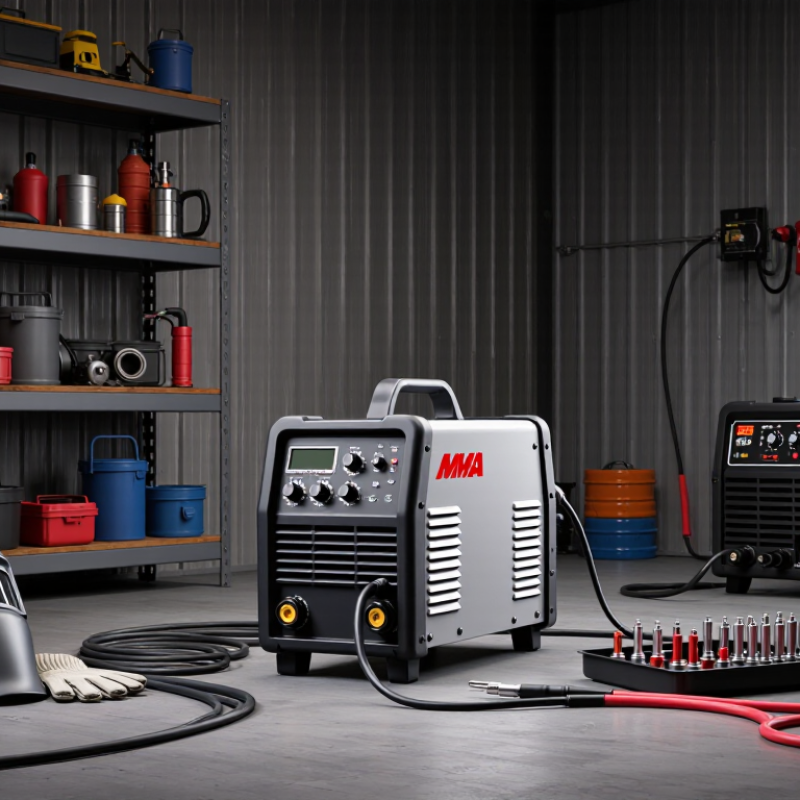
| 1. Match the welder to the workload | Typical material thickness, joint type, weld length, and hours of use. | For occasional repairs and light fabrication, a lower-output machine may be adequate. Repeated work on thicker sections can require higher output and a stronger duty cycle. | The right capacity depends on the actual electrode and job, not simply the maximum amperage printed on the welder. |
| 2. Confirm it supports stick welding | The specified process and output characteristics. | Choose a machine rated for MMA/SMAW, also called shielded metal arc welding. This process uses a consumable, flux-coated stick electrode; the electrode melts to provide filler metal while its flux helps shield the weld. | A power source intended for another process may not provide the controls or output characteristics needed for reliable stick welding. |
| 3. Check the current range against electrode needs | Electrode diameter, electrode type, welding position, and recommended amperage. | Approximate current ranges often encountered are 40–80 A for 2.0 mm electrodes, 60–100 A for 2.5 mm, and 90–150 A for 3.2 mm. Always follow the electrode maker’s specified range; requirements vary by electrode classification and position. | The usable adjustment range is more important than maximum output when selecting electrodes for everyday work. |
| 4. Understand the duty cycle | Rated output, duty-cycle percentage, and the stated test period. | A 60% duty cycle over a 10-minute period means up to 6 minutes of welding followed by 4 minutes of cooling at the stated rated conditions. Compare ratings at the current you expect to use. | Long weld runs and frequent welding can trigger thermal protection on a machine with insufficient duty cycle. |
| 5. Verify the available power supply | Input voltage, phase, circuit capacity, and the machine’s input-current requirements. | Check the rating plate and installation instructions against the actual supply and circuit. Do not assume a machine can deliver full output from every voltage or outlet. | An undersized circuit or incompatible supply can limit output, cause nuisance trips, or create an electrical safety risk. |
| 6. Decide whether AC, DC, or both are needed | Electrode compatibility, arc behavior, and the intended work environment. | Many common electrodes can be used on DC, while some are designed for AC or work on either current type. Confirm the electrode’s classification and polarity requirements before welding. | Having the required current type and polarity helps maintain a stable arc and proper electrode performance. |
| 7. Consider portability and operating conditions | Machine weight, cable reach, work location, and exposure to dust or moisture. | For field repairs, consider a manageable weight and cables long enough for the setup. Keep the machine within its specified environmental limits and protect it from rain, conductive dust, and impacts. | MMA is often used for maintenance and outdoor work, but safe placement and suitable equipment protection remain essential. |

.svg)