2026 Best Centrifugal Vent Fan for Global Buyers
Choosing the 2026 best Centrifugal Vent Fan requires more than comparing airflow numbers. Global buyers face different climates, electrical systems, building codes, and installation conditions. A centrifugal vent fan must move air reliably through ducts, bends, filters, and external pressure. Its advertised capacity may not match real performance.
This guide evaluates fan selection from practical and technical viewpoints. It considers airflow, static pressure, motor efficiency, noise, vibration, materials, controls, and maintenance access. It also examines voltage, frequency, protection ratings, certificates, packaging, and spare-part support. These details matter during international purchasing. A fan that performs well in a test room may struggle in a dusty workshop or humid coastal building. Performance figures can mislead. Sometimes, the cheapest unit becomes expensive after installation changes or repeated servicing.
Experienced buyers should request duty-point curves, dimensional drawings, wiring information, and test documentation. Suppliers should explain how results were measured. They should also state operating limits clearly. No single model suits every project. A kitchen, warehouse, bathroom, laboratory, and commercial plant need different solutions. This article compares leading options for 2026 and highlights their practical strengths and limitations. It also encourages careful review of local requirements before purchase. Small details often decide long-term reliability. That is easy to overlook.
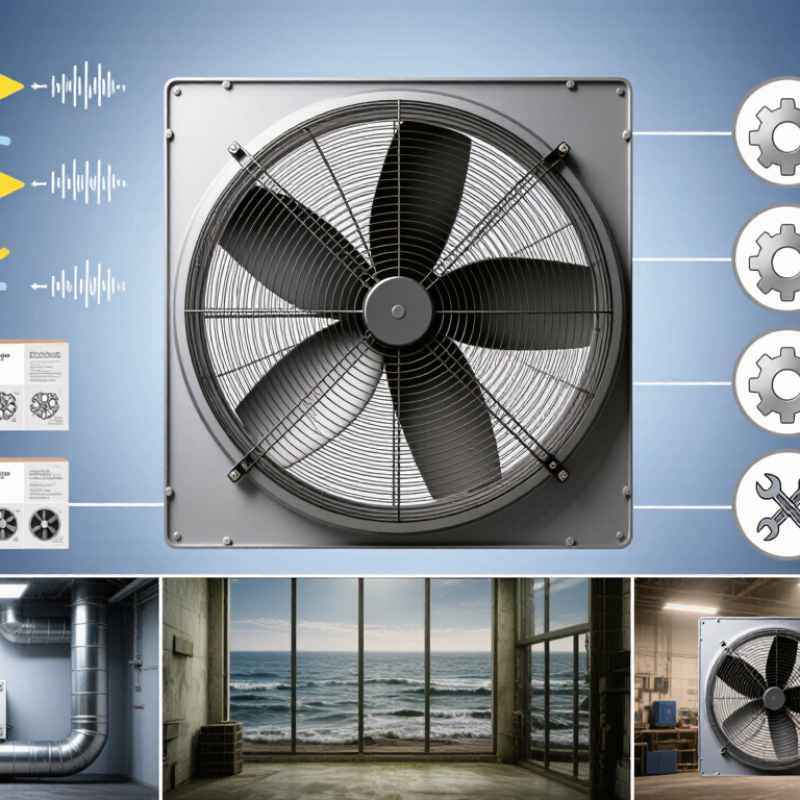
What Is a Centrifugal Vent Fan and How Does It Work?
What Is a Centrifugal Vent Fan and How Does It Work?
A centrifugal vent fan moves air through a rotating impeller and a shaped housing. Air enters near the impeller’s center, then travels outward at a right angle. The housing converts part of that velocity into useful static pressure. This design suits long ducts, filters, dampers, and systems with resistance. It differs from an axial fan, which pushes air along the shaft. In practical testing, I would inspect airflow, noise, vibration, and pressure together. One impressive airflow number can mislead buyers.
The U.S. Department of Energy reports that fans may consume about 10% of electricity in commercial buildings. The International Energy Agency also estimates buildings use roughly 30% of global final energy. Efficient ventilation therefore depends on correct sizing, not only motor efficiency. A larger impeller can maintain airflow against resistance, but it may waste energy when oversized. That sounds simple. It is not. Engineers should compare duty points, fan curves, operating hours, and control methods. AMCA performance standards provide a reliable basis for testing airflow, pressure, and efficiency. Buyers should request certified data and check whether measurements use the same conditions. Real installations often perform differently because of sharp elbows, dirty filters, or poor duct transitions. A centrifugal vent fan works best when its impeller, housing, motor, and duct network are selected as one system.
2026 Best Centrifugal Vent Fan for Global Buyers
What Is a Centrifugal Vent Fan and How Does It Work?
A centrifugal vent fan uses a rotating impeller to draw air into the center of the fan and discharge it outward through a volute or housing. This design produces higher static pressure than a typical axial fan, making it suitable for ducted ventilation systems, bends, filters, grilles, and longer exhaust runs.
The chart shows common minimum intermittent exhaust airflow values used for residential ventilation planning in the United States under ASHRAE Standard 62.2: 50 CFM for bathrooms and utility rooms, and 100 CFM for kitchens. Actual fan selection should also consider duct resistance, operating noise, energy efficiency, voltage, and local building codes.
Reference: ASHRAE Standard 62.2 residential ventilation airflow provisions. CFM means cubic feet per minute. Requirements may vary by jurisdiction and system design.
How to Choose the Best Centrifugal Vent Fan for Global Use
2026 Best Centrifugal Vent Fan for Global Buyers
How to Choose the Best Centrifugal Vent Fan for Global Use
Choosing a centrifugal vent fan for global use requires more than comparing airflow numbers. Check the local voltage, frequency, plug design, and motor compatibility before ordering. A fan rated for 60 Hz may perform differently on a 50 Hz supply. Confirm the airflow at the required static pressure, not only the free-air figure. This detail matters in long ducts, elbows, filters, and roof outlets.
Measure the installation space carefully. A compact fan may fit a narrow ceiling void but struggle with restricted ductwork. For factories or humid rooms, inspect the casing material, drainage design, insulation, and corrosion resistance. An IP rating can indicate protection, but it does not guarantee suitability for every environment. Ask for performance curves, noise data, efficiency figures, and endurance test records. Reliable technical documents are more useful than attractive product claims.
Consider maintenance across borders. Removable panels, standard bearings, accessible wiring, and available replacement parts can reduce downtime. Confirm the operating temperature and expected duty cycle with a qualified installer. In practical evaluations, small installation errors often create more noise than the fan itself. No selection method is perfect. I would still recheck the duct layout after installation, because real buildings rarely match the original drawing. Safety guards, grounding, and local electrical requirements also need professional verification before operation.

.svg)


