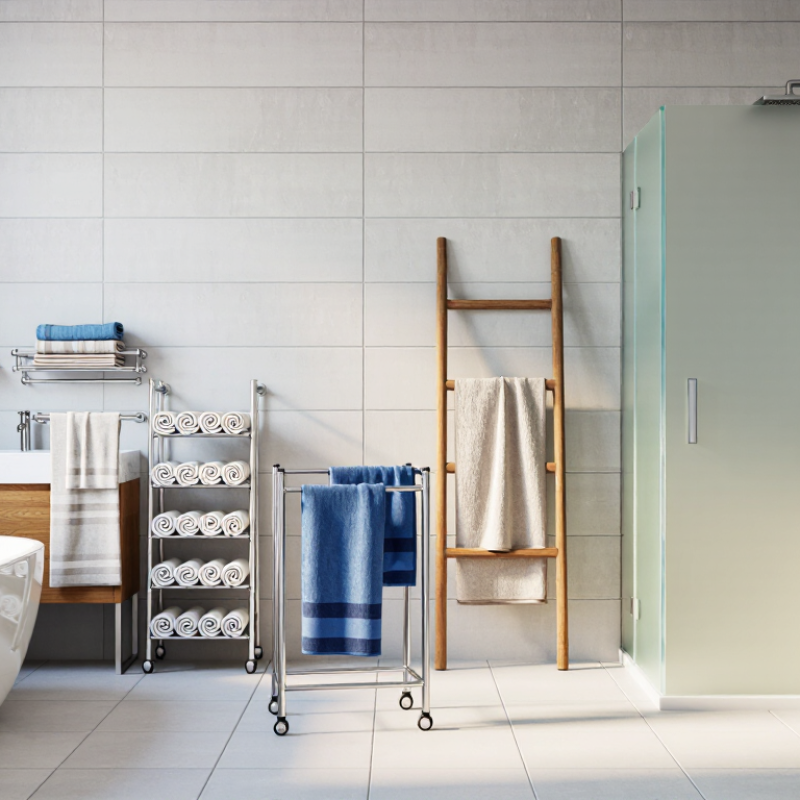
| Wall-Mounted Bar | Screws and wall anchors; direct attachment to a stud is preferred when available. | Drywall with suitable anchors, tile, masonry, or a reinforced wall. | Usually 1–2 bath towels, depending on bar length and mounting strength. | Wipe regularly with a soft, damp cloth. Dry the surface to reduce water spots and corrosion. | Do not rely on weak plastic anchors for heavy wet towels. Tighten loose hardware promptly and keep the bar firmly secured. | Most bathrooms and everyday towel drying. | ★★★★★ |
| Wall-Mounted Double Bar | Screws and anchors, preferably fixed into studs or blocking. | Open wall space with enough depth for two towels to hang separately. | Usually 2–4 towels, although airflow may be reduced when bars are crowded. | Clean between the bars and inspect all mounting points because the extra weight increases stress on the hardware. | Allow adequate spacing between bars. Avoid overloading the upper bar or using the rack as a handhold. | Shared bathrooms and households needing more hanging space. | ★★★★☆ |
| Freestanding Rack | No permanent installation; assembled on a level floor. | Large, dry floor areas with minimal traffic and sufficient ventilation. | Commonly 2–4 towels, based on the number and length of arms. | Dust the base and dry any moisture trapped beneath it. Check joints and feet for looseness or corrosion. | Choose a wide, stable base. Keep it away from door swings and avoid placing it where it can be easily knocked over. | Rental homes or bathrooms where drilling is not desirable. | ★★★★☆ |
| Over-the-Door Rack | Hangs over the top edge of a compatible door; usually requires no drilling. | Solid interior doors with enough clearance between the door and frame. | Usually 1–3 towels, depending on the number of hooks or bars. | Remove periodically to clean the door edge and rack contact points. Check pads for wear. | Confirm that the door closes freely. Do not use on a door that cannot support the added load or where the rack obstructs emergency access. | Small bathrooms and temporary, renter-friendly storage. | ★★★★☆ |
| Adhesive-Mounted Rack | Pressure-sensitive adhesive or adhesive mounting pads applied to a clean, smooth surface. | Smooth, non-porous surfaces such as properly finished tile, glass, or metal. | Often 1–2 light towels; the stated rating varies considerably by product and surface. | Keep the mounting area dry and avoid harsh cleaners that may weaken the adhesive or damage the finish. | Follow the curing time and load limit exactly. Avoid mounting over dusty, textured, damp, cracked, or poorly bonded surfaces. | Light-duty storage when drilling is not possible. | ★★★☆☆ |
| Suction-Cup Rack | Vacuum suction cups attached to a smooth, non-porous surface. | Flat glass, polished tile, or other surfaces that create an airtight seal. | Usually suitable for 1 light towel; performance decreases with added moisture and weight. | Clean and dry both the cups and wall surface. Re-seat the cups if the vacuum weakens. | Never install on porous, textured, dusty, or uneven surfaces. Do not use it as a grab bar or support rail. | Temporary or low-load towel hanging. | ★★☆☆☆ |
| Heated Towel Rack | Wall-mounted or freestanding; electrical models require a suitable outlet and bathroom-safe installation. | Dry, well-ventilated wall or floor location away from direct water spray. | Commonly 1–4 towels, depending on size, spacing, and electrical rating. | Clean only when switched off and cool. Keep vents and heating surfaces free from lint, residue, and excessive fabric buildup. | Use appropriate bathroom electrical protection, keep cords away from water, and follow clearance and grounding requirements. It is not a substitute for a certified grab bar. | Cold or humid bathrooms where faster towel drying is important. | ★★★★☆ |
| Towel Ring | Usually screw-mounted with a wall plate and suitable anchors. | Near a sink or compact wall area; not usually intended for full-size bath towels. | One hand towel or washcloth. | Wipe the ring and mounting plate frequently because handwashing areas receive frequent splashes. | Install at a comfortable height and avoid sharp edges. Ensure the ring cannot swing into nearby fixtures. | Hand towels beside a sink. | ★★★★★ |
| Towel Hooks | Screws and anchors, adhesive pads, or installation on a door or cabinet. | Wall sections, the back of a door, or other locations with sufficient clearance. | One towel per hook; several hooks can increase total capacity. | Clean around the hook base and inspect for looseness. Towels should be spread out when possible to improve drying. | Do not install where hooks create a head-level hazard or interfere with doors, drawers, or electrical equipment. | Compact bathrooms and multiple users needing individual hanging points. | ★★★★★ |
| Ceiling- or Floor-to-Ceiling Rack | Fixed between structural surfaces or secured to the ceiling and floor according to the installation system. | Large bathrooms with suitable structural support and adequate clearance. | Often 2–4 towels, depending on the number of arms or rails. | Dust upper sections and inspect tension points, feet, brackets, and fasteners regularly. | Requires careful verification of structural support and stability. Do not install where it blocks lighting, ventilation, or escape paths. | Bathrooms needing vertical storage without using a broad wall area. | ★★★☆☆ |

.svg)