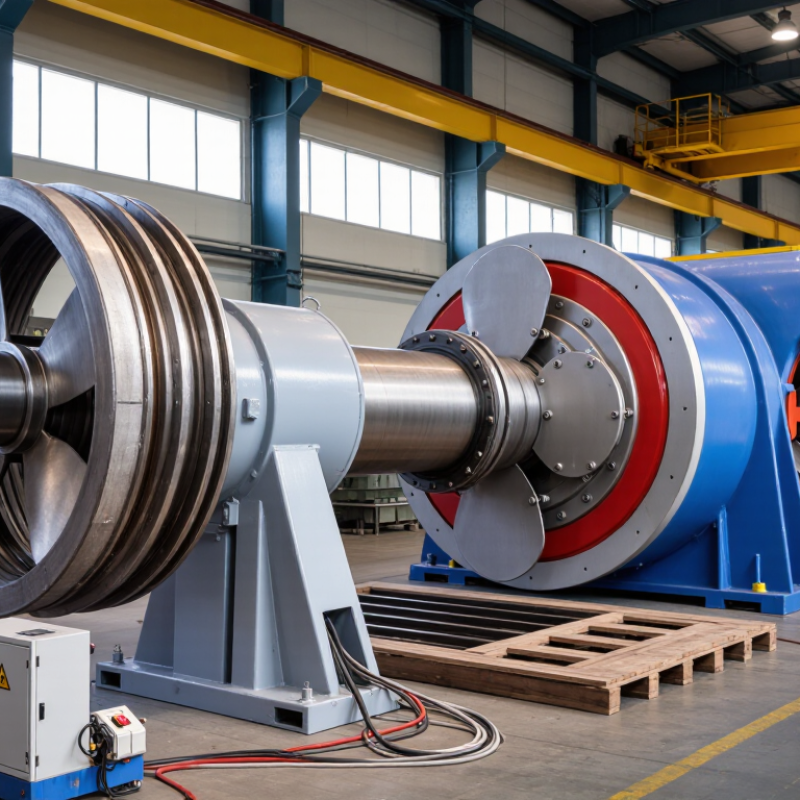
| Mixer Configuration | Compare single-shaft and twin-shaft horizontal designs. Twin-shaft machines are generally suited to rapid, intensive mixing, while single-shaft units usually have a simpler mechanical layout. | The shaft arrangement affects mixing speed, homogeneity, power demand, maintenance access, and the purchase price. | Request a technical drawing, shaft arrangement, mixing-arm layout, recommended applications, and a clear explanation of the design’s operating limits. |
| Nominal Batch Capacity | Common stationary commercial models are available in approximately 0.5–4.0 m³ per batch, although the actual range depends on the machine design and application. | Selecting capacity according to the required hourly output prevents overloading, inefficient operation, and unnecessary capital cost. | Confirm nominal volume, recommended working fill level, maximum aggregate size, batch-cycle time, and the manufacturer’s rated hourly capacity. |
| Actual Production Output | Calculate output using the complete cycle: loading time + mixing time + discharge time + cleaning or repositioning time. Do not rely only on the advertised theoretical capacity. | Real production is normally lower than a theoretical calculation because of loading delays, material variation, operator procedures, and discharge conditions. | Ask for a cycle-time calculation based on the intended concrete mix, aggregate size, moisture content, loading method, and working hours. |
| Mixing Uniformity | The mixer should produce a consistent blend of cement, water, aggregates, and admixtures within the specified mixing cycle. | Uniform concrete supports consistent strength, workability, density, and reduced material waste. | Require a factory acceptance test or site test using the intended recipe. Check slump, visual uniformity, discharge consistency, and the agreed mixing time. |
| Wear Protection | Prefer replaceable wear liners and mixing components made from suitable wear-resistant steel. The required specification depends on aggregate hardness and operating conditions. | Liners, blades, paddles, and arms are exposed to abrasive aggregate. Replaceable parts can reduce long-term downtime and repair cost. | Request liner and blade material grades, thicknesses, hardness data where applicable, replacement procedures, expected service conditions, and spare-part prices. |
| Drive System | The motor and gearbox should be selected for the batch volume, mix resistance, aggregate size, start-up load, and operating duty rather than by motor power alone. | An undersized drive can cause overheating and poor reliability, while an oversized drive may increase purchase and operating costs. | Request motor rating, gearbox model, service factor, transmission arrangement, overload protection, lubrication requirements, and electrical compatibility. |
| Electrical Compatibility | Confirm voltage, frequency, phase, control-panel configuration, motor starting method, and protection requirements before placing the order. | Electrical mismatches can delay installation, require additional components, or void equipment warranty conditions. | Obtain a wiring diagram, motor nameplate data, control-panel specification, input-power requirements, emergency-stop arrangement, and applicable electrical documentation. |
| Control and Automation | Basic manual controls may suit simple applications. PLC-based control, recipe storage, interlocks, and optional variable-frequency control are useful for repeatable production. | Automation can improve batching accuracy, operator safety, repeatability, troubleshooting, and production records. | Request the control logic description, supported languages, alarm list, data-export options, remote-support method, and a demonstration of the control sequence. |
| Safety Design | The machine should include guarding for moving parts, emergency stops, access-door interlocks where applicable, safe maintenance access, and clear warning labels. | Concrete mixers contain rotating shafts, blades, and high-torque drives that present serious mechanical hazards. | Review the risk assessment, safety manual, guarding details, emergency-stop test procedure, maintenance isolation instructions, and applicable conformity documentation. |
| Applicable Standards | For European-market equipment, EN 12151 addresses safety requirements for concrete mixers and concrete placing machines. Other markets may require different local regulations. | Compliance requirements affect machine design, documentation, import clearance, workplace safety, and project acceptance. | Ask for the declaration of conformity where applicable, standards list, risk assessment, user manual, test records, and documentation matching the exact supplied model. |
| Manufacturing Quality System | An ISO 9001-certified quality-management system can indicate documented processes, but certification alone does not guarantee mixer performance. | Consistent fabrication, welding, inspection, assembly, and traceability reduce the risk of defects between individual machines. | Check the certificate validity and scope, inspection plan, welding records where relevant, dimensional inspection reports, and final testing procedure. |
| Factory Acceptance Testing | The purchase contract should define pre-shipment inspection, no-load checks, loaded operation, discharge operation, safety-device checks, and document review. | A documented acceptance test identifies defects before shipment and creates an objective basis for final payment and acceptance. | Use a signed FAT checklist covering rotation direction, noise, vibration, current draw, discharge gate operation, lubrication, guards, controls, and included accessories. |
| Price Comparison | Compare total landed cost rather than the equipment-only quotation. Include mixer price, options, packaging, freight, insurance, import charges, installation, commissioning, and taxes. | A lower initial quotation can become more expensive after freight, missing accessories, installation work, replacement parts, and production downtime are included. | Request an itemized quotation with Incoterms, payment schedule, lead time, included and excluded components, packing details, spare parts, and all optional items listed separately. |
| Warranty Terms | Establish a written warranty period, commonly targeted by buyers at 12 months after commissioning or 18 months after shipment, whichever occurs first; exact terms must be negotiated. | Warranty wording determines responsibility for manufacturing defects, excluded wear parts, travel costs, replacement freight, and labor. | Confirm the start date, covered components, exclusions, claim procedure, response time, replacement-part policy, labor responsibility, and required maintenance records. |
| Spare-Parts Availability | Frequently replaced items should be identifiable and available, including liners, blades or paddles, seals, bearings, belts or couplings, sensors, relays, and lubrication components. | Delays in obtaining wear parts can stop concrete production even when the main mixer remains mechanically sound. | Request a two-year recommended spare-parts list, part numbers, drawings, prices, minimum order quantities, stock location, and estimated dispatch time. |
| After-Sales Support | Prefer suppliers that provide installation guidance, commissioning support, operation and maintenance manuals, troubleshooting procedures, and a defined technical-contact process. | Effective support shortens commissioning time, reduces operator errors, and helps prevent avoidable mechanical failures. | Obtain the service organization chart, support hours, escalation route, remote-diagnostic options, engineer availability, training content, and references for comparable installations. |
| Supplier Evaluation Score | Use a weighted scorecard: quality and testing 30%, technical suitability 25%, total cost 20%, after-sales support 15%, delivery and documentation 10%. | A weighted model prevents the lowest initial price from dominating more important factors such as reliability, safety, and lifecycle cost. | Score each supplier using documented evidence only. Mark unsupported claims as “not verified” and include a commercial-risk note before final selection. |

.svg)