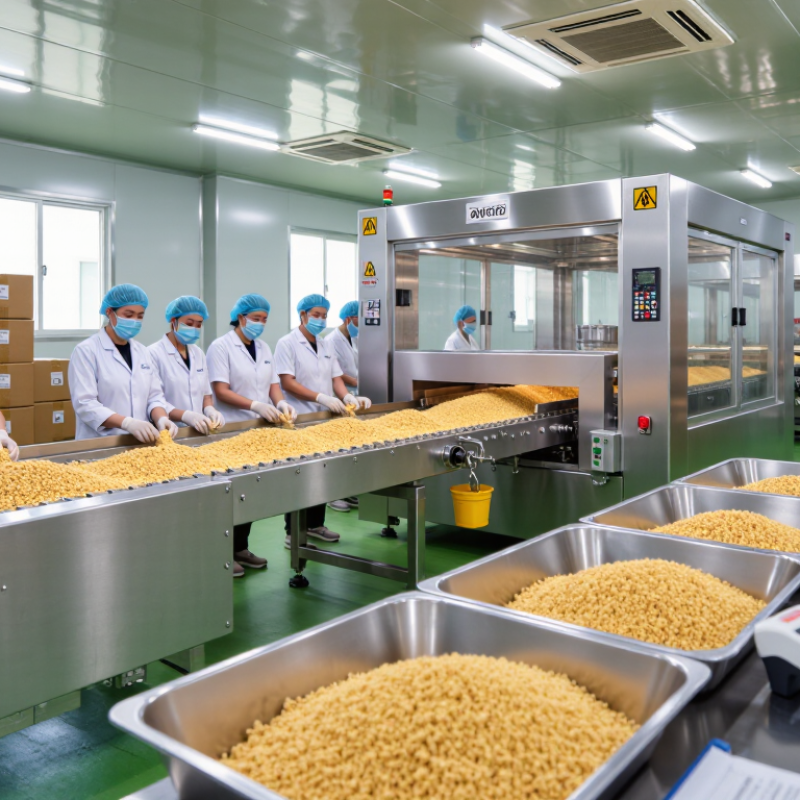
| Ingredient transparency | Review the complete ingredient list, including flour, yeast, salt, sugar, oil, emulsifiers, preservatives, and processing aids. | Ingredients should match the approved product specification and be declared in descending order by weight where required. No undeclared additives or fillers. | China GB 7718 for prepackaged food labeling; China GB 2760 for the use of food additives. | Current formula, ingredient specification, additive declaration, and finished-product label artwork. | Critical |
| Wheat and gluten control | Confirm wheat flour origin, gluten allergen declaration, and controls for cross-contact with milk, egg, soy, sesame, or other allergens. | All allergens present in the recipe or manufacturing environment should be identified, labeled, and controlled according to the buyer’s destination-market requirements. | GB 7718 labeling requirements and the applicable allergen rules of the importing country. | Allergen matrix, segregation procedure, cleaning validation records, and allergen statement. | Critical |
| Crumb size and shape | Measure particle-size distribution, flake shape, fines, and oversized pieces using the agreed sieve or image-analysis method. | Set a written product range, such as fine, medium, or coarse panko, with an agreed tolerance for undersize and oversize particles. Do not rely only on visual descriptions. | Buyer-approved product specification and validated internal sieve method. | Particle-size test report, retained sample, sieve records, and approved reference sample. | High |
| Moisture and crispness | Check moisture, water activity, crispness after frying or baking, and resistance to softening during storage. | Use a buyer-defined moisture and water-activity limit validated for the product and packaging. Results must remain within specification throughout the stated shelf life. | Validated internal method; water activity is commonly measured under ISO 18787 or an equivalent validated method. | Batch moisture and water-activity results, frying-performance test, and shelf-life study. | High |
| Color and appearance | Evaluate whiteness or cream color, burn marks, dark particles, foreign material, and visual uniformity. | No visible mold, insects, stones, metal, glass, or unexplained dark particles. Color range and defect tolerance should be defined with photographs or physical samples. | Good Manufacturing Practice requirements under GB 14881 and the buyer’s finished-product specification. | Incoming and finished-product inspection records, defect catalogue, and production samples. | High |
| Flavor and odor | Check for stale, sour, rancid, burnt, chemical, or moldy odors before and after cooking. | Product should have a clean wheat-bread aroma and no off-odor. Sensory evaluation should use a documented method and trained or approved assessors. | Buyer-approved sensory specification and documented quality-control procedure. | Sensory evaluation form, batch samples, complaint records, and corrective-action reports. | High |
| Microbiological safety | Test for total plate count, yeasts and molds, and relevant pathogens based on the product risk assessment and destination market. | Each tested batch must comply with the applicable legal limits and the buyer’s microbiological specification. Pathogen testing should be performed by a competent laboratory. | China GB 29921 where applicable, plus destination-market microbiological requirements. | Recent batch COA, laboratory accreditation details, sampling plan, and environmental-monitoring records. | Critical |
| Chemical contaminants | Assess heavy metals, mycotoxins, pesticide residues, and other contaminants relevant to wheat-based products. | Results must meet the applicable maximum limits for the product category and destination market, with risk-based testing of flour and finished product. | China GB 2762 for contaminants; China GB 2763 for pesticide residues; other applicable national limits. | Raw-material COAs, risk-assessment plan, independent laboratory reports, and supplier approval records. | Critical |
| Foreign-material prevention | Verify sieving, magnets, metal detection, X-ray inspection where used, glass-and-brittle-plastic control, and line clearance. | Controls should be validated, routinely challenged, documented, and linked to a corrective-action process. Critical control limits must be defined in the HACCP plan. | GB 14881 and the facility’s HACCP-based food-safety plan. | HACCP flow chart, detector challenge records, preventive-maintenance records, and incident logs. | Critical |
| Food-safety management system | Check whether the facility operates a documented HACCP system or a certified food-safety management system. | Prefer a current, independently audited certification such as ISO 22000, FSSC 22000, or a recognized HACCP certification, while verifying the certificate scope and site address. | ISO 22000, FSSC 22000, HACCP principles, and applicable Chinese food-production requirements. | Valid certificate, audit report, scope, expiry date, nonconformity closure, and latest surveillance result. | Critical |
| Traceability and recall readiness | Test whether raw materials, packaging, production lots, laboratory results, and shipments can be traced in both directions. | The manufacturer should be able to identify affected lots quickly and demonstrate a documented mock recall at a defined frequency. | GB 14881 traceability and recall requirements; applicable importing-country regulations. | Mock-recall report, lot-coding procedure, dispatch records, and corrective-action documentation. | Critical |
| Packaging and shelf life | Review packaging barrier properties, seal integrity, oxygen or moisture protection, lot coding, and storage conditions. | Packaging should protect the product from moisture, contamination, and physical damage. Shelf life must be supported by real-time or scientifically justified stability data. | GB 7718 labeling requirements and the buyer’s packaging specifications. | Packaging specification, seal-strength or integrity results, shelf-life study, storage instructions, and transport test records. | High |
| Label and export documentation | Confirm product name, ingredient list, allergen declaration, net quantity, production date, shelf life, storage conditions, lot number, and country-of-origin information. | Label information should be consistent with the formula, test reports, purchase contract, and destination-market legal requirements. | China GB 7718 and the labeling rules of the importing country. | Final label proof, product specification, COA template, commercial invoice data, packing list, and export documents. | High |
| Batch consistency | Compare multiple production batches for crumb size, moisture, color, sensory profile, microbiology, and cooking performance. | All tested batches should meet the same approved specification. Any deviation should have a documented investigation and disposition decision. | Approved product specification, statistical process-control procedure, and quality agreement. | At least three representative batch COAs where available, retained samples, trend charts, and deviation records. | Critical |

.svg)