| Alloy Selection | 6063 for architectural and general-purpose profiles; 6061 for higher structural strength; 6005A where a balance of strength and extrudability is required. | 6063-T5 commonly provides an ultimate tensile strength of approximately 152 MPa and yield strength of approximately 110 MPa. 6061-T6 commonly provides an ultimate tensile strength of approximately 260 MPa and yield strength of approximately 240 MPa. | Alloy choice affects die life, extrusion speed, surface quality, machinability, strength, and total material cost. | Exact alloy designation, temper, applicable material standard, chemical composition report, and mechanical test results for the supplied batch. |
| Temper and Mechanical Performance | Use T5 for many architectural profiles and T6 when higher mechanical performance is required and the design permits additional heat treatment. | T6 generally requires solution heat treatment and artificial aging, which can increase processing time and energy use compared with T5. | Using a stronger temper than necessary can increase cost and distortion risk without improving the actual product function. | Specified yield strength, tensile strength, elongation, hardness range, and the test method used for verification. |
| Raw Material Cost Exposure | Build the quotation around a separately identified aluminum billet or metal-index component plus conversion costs. | Aluminum prices are commonly quoted in currency per metric tonne and can change materially during a project. A fixed price should state its validity period, typically 15–30 days unless otherwise agreed. | A profile price that hides the metal basis makes it difficult to compare suppliers or manage price changes during long programs. | Metal-price basis, alloy surcharge, currency, quotation validity, adjustment formula, minimum order quantity, and packaging charges. |
| Typical Cost Structure | Compare the complete delivered cost rather than only the extrusion conversion price. | Major cost elements include aluminum content, die and tooling, extrusion, heat treatment, surface finishing, fabrication, packing, freight, testing, and import duties or taxes. | Finishing and fabrication can represent a substantial share of the final cost, especially for small volumes or highly customized profiles. | Itemized quotation showing tooling, extrusion, finishing, fabrication, inspection, packing, freight, and all one-time charges. |
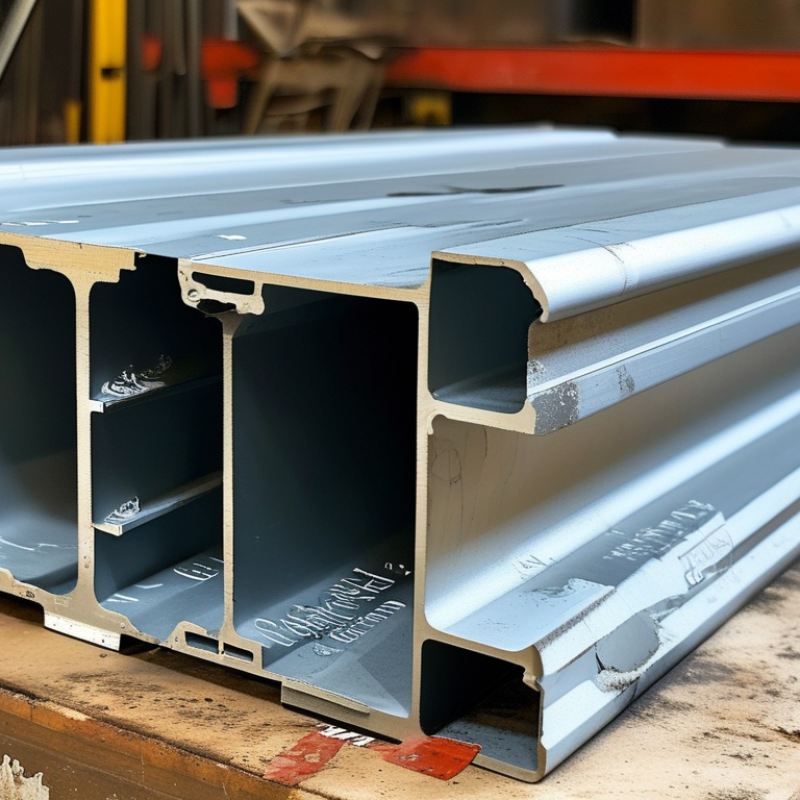
| Profile Geometry | Prefer balanced wall thicknesses, practical corner radii, and a design that avoids unnecessary metal concentration. | Very thin walls, deep hollows, narrow slots, sharp internal corners, and large differences in wall thickness generally increase extrusion difficulty and the risk of dimensional variation. | Design-for-extrusion can reduce scrap, improve die life, shorten lead time, and lower the required press capacity. | Recommended minimum wall thickness, dimensional capability by section, die feasibility review, expected scrap rate, and design comments before tooling approval. |
| Dimensional Tolerances | Use the applicable aluminum extrusion tolerance standard and specify only the tolerances needed for function. | Common commercial extrusion tolerances are less restrictive than precision-machined tolerances. Tight tolerances may require stretch straightening, additional machining, or special process controls. | Over-specifying tolerances increases cost and rejection risk without necessarily improving assembly performance. | Applicable tolerance table, straightness and twist limits, measurement equipment, inspection frequency, and a sample dimensional inspection report. |
| Surface Finish | Mill finish for non-visible applications; anodizing or powder coating for appearance and corrosion protection. | Typical architectural anodizing thickness classes include approximately 10, 15, and 20 micrometres. Powder-coating specifications should define coating thickness, adhesion, color tolerance, and durability requirements. | Finish selection affects appearance, corrosion resistance, environmental compliance, lead time, and unit cost. | Finish standard, coating or anodizing thickness, color tolerance, gloss level, pretreatment process, sample approval procedure, and warranty conditions. |
| Corrosion and Environment | Match alloy and finish to humidity, salt exposure, chemicals, temperature, and expected service life. | Marine or coastal applications may require enhanced pretreatment, suitable coating systems, drainage design, and corrosion testing. Aluminum should be isolated from incompatible metals where galvanic corrosion is possible. | Environmental conditions can cause premature surface failure even when the extrusion itself meets its mechanical requirements. | Corrosion-test method, pretreatment details, coating-performance data, compatibility guidance, and recommendations for fasteners and adjoining materials. |
| Recycled Content and Carbon Data | Request verified pre-consumer and post-consumer recycled content separately, together with product carbon information where required. | Recycled aluminum can require substantially less energy than primary aluminum, but the actual carbon footprint depends on electricity mix, scrap source, remelting losses, transport, and allocation method. | Environmental claims must be traceable and comparable; recycled-content percentage alone does not provide a complete product carbon footprint. | Chain-of-custody evidence, recycled-content declaration, product carbon footprint boundary, electricity data, environmental product declaration if available, and audit status. |
| Regulatory Compliance | Define the destination-market requirements before tooling and production release. | Potential requirements may include REACH substance restrictions, RoHS where applicable, conflict-minerals reporting where relevant, packaging rules, construction-product requirements, and country-specific import documentation. | Compliance gaps can delay customs clearance, project approval, or market placement even when the profile meets dimensional requirements. | Declaration of conformity, material declaration, restricted-substance statement, test reports, safety data where applicable, and document-retention period. |
| Quality Management | Use a supplier with a documented quality-management system and controlled corrective-action process. | ISO 9001 certification is a useful baseline, but it does not by itself prove capability for a specific profile, finish, tolerance, or end-use requirement. | Process controls, traceability, calibrated equipment, and corrective-action discipline are more relevant than certification alone. | Valid certificate scope, process flow, control plan, FMEA where appropriate, calibration records, nonconformance procedure, and recent audit evidence. |
| Tooling and Die Ownership | Clarify die ownership, maintenance responsibility, storage period, modification charges, and reuse rights. | Die cost depends on profile complexity, press compatibility, steel grade, number of cavities, and expected production volume. A die trial may require several iterations before approval. | Unclear tooling terms can create unexpected costs and make supplier changes difficult later. | Tooling drawing, die price, expected die life, trial quantity, revision policy, ownership statement, storage terms, and transfer conditions. |
| Lead Time and Capacity | Separate tooling lead time, first-article approval, mass-production lead time, finishing time, and transit time. | Indicative planning ranges are often 2–6 weeks for a new die, 1–3 weeks for first samples after die readiness, and 3–8 weeks for repeat production, excluding unusual finishing or international transport. | Quoted production lead time can be misleading if tooling, approval, queue time, and shipping are not listed separately. | Capacity reservation, press size, monthly output, current utilization, confirmed production slot, holiday calendar, and contingency plan. |
| Minimum Order Quantity | Compare minimum order by profile weight, length, pieces, and production batch. | Minimum quantities vary with press setup, die size, finishing batch, packaging method, and whether the material is standard or custom. | A low unit price may be uneconomical if the required order quantity creates excess inventory or high storage cost. | Minimum run length, minimum weight, minimum finishing batch, setup charge, leftover-material policy, and mixed-load options. |
| Fabrication and Assembly | Specify cutting, drilling, punching, CNC machining, deburring, bending, welding, and assembly requirements separately. | Secondary operations can introduce burrs, distortion, dimensional changes, and finish damage. Machined datums and inspection points should be defined on the drawing. | Early process planning prevents a profile from being technically extrudable but difficult or expensive to finish. | Operation sequence, equipment capability, positional tolerance, burr limits, protective-film requirements, and finished-part inspection report. |
| Packaging and Logistics | Use packaging that protects visible surfaces and prevents bending during handling and transport. | Long profiles may require reinforced crates, separators, moisture protection, and loading restrictions. Freight cost is affected by length, volume, weight, destination, and delivery terms. | Damage, moisture staining, and mixed-lot identification problems can create hidden costs after arrival. | Packaging specification, maximum bundle weight, protection materials, barcode or lot labeling, loading photos, Incoterms, and claims procedure. |
| Supplier Evaluation Score | Use a weighted score instead of selecting solely on quoted price. | A practical evaluation model can assign 30% to total landed cost, 20% to quality capability, 15% to compliance, 15% to delivery reliability, 10% to technical support, and 10% to sustainability and traceability. | Weighted evaluation reduces the risk of choosing a low-price supplier with weak documentation, unstable quality, or inadequate capacity. | Completed supplier questionnaire, sample approval results, on-time-delivery history, defect rate, corrective-action records, and references for comparable technical work. |
| Payment and Commercial Risk | Align payment milestones with tooling completion, sample approval, production release, and shipment. | For customized profiles, staged payments can reduce exposure compared with paying the entire tooling and production value before technical approval. | Commercial terms influence cash flow and provide practical protection when specifications, samples, or delivery dates change. | Payment schedule, currency, credit terms, price-adjustment mechanism, warranty, liability limits, inspection rights, and dispute-resolution terms. |
| Final Selection Rule | Choose the profile and supplier that meet functional requirements at the lowest verified total cost of ownership. | Confirm alloy, temper, tolerances, finish, compliance documents, tooling terms, lead time, delivered price, and sustainability evidence before purchase-order release. | The best 2026 sourcing decision balances engineering performance, cost stability, regulatory readiness, supply continuity, and measurable environmental data. | Obtain an approved drawing, signed specification, golden sample, inspection plan, commercial quotation, and documented change-control procedure. |

.svg)