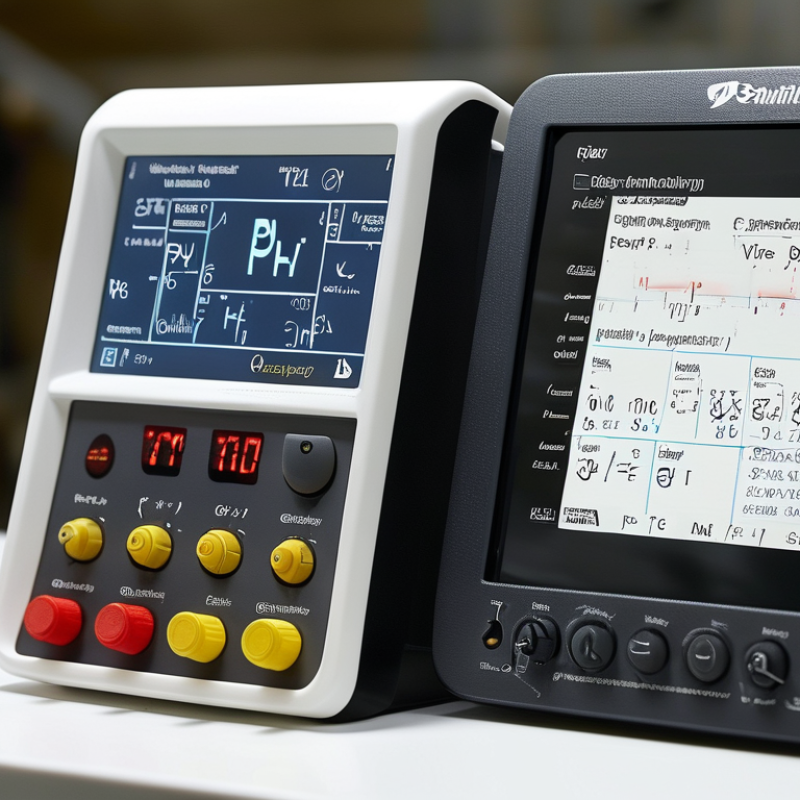
| Portable pH Meter | Usually pH 0 to 14, depending on the electrode | Commonly ±0.01 to ±0.02 pH | Field water testing, wastewater sampling, aquaculture, agriculture, environmental surveys, and laboratory spot checks | On-site and temporary measurements | Display readability, battery life, waterproof rating, automatic temperature compensation, calibration memory, and replaceable electrode | Requires regular calibration and careful electrode storage; not ideal for unattended continuous monitoring |
| Benchtop Laboratory pH Meter | Typically pH 0 to 14 | Commonly ±0.001 to ±0.01 pH, depending on instrument and electrode | Research laboratories, quality control, pharmaceuticals, food testing, chemical analysis, and education | Controlled indoor laboratory conditions | Resolution, calibration points, data logging, electrode compatibility, temperature measurement, and connection to a balance or printer | Less suitable for harsh field conditions or direct installation in process pipelines |
| Online Industrial pH Analyser | Usually pH 0 to 14; specialized electrodes may cover narrower or extended ranges | Commonly ±0.02 to ±0. limpia?01 pH in practical process use | Water treatment, industrial wastewater, chemical processing, cooling water, boiler systems, and neutralization control | Continuous measurement in tanks, channels, or pipelines | Process connection, sensor durability, automatic cleaning, relay or analog output, digital communication, enclosure protection, and maintenance access | Accuracy can be affected by coating, electrical noise, flow conditions, grounding, and delayed sensor response |
| Differential pH Analyser | Commonly pH 0 to 14 | Often around ±0.02 pH under suitable process conditions | High-resistance water, wastewater, chemical processes, and installations with grounding or reference-electrode problems | Continuous industrial measurement with electrically noisy or difficult process conditions | Reference system design, resistance to poisoning, sensor diagnostics, grounding performance, and compatibility with the process medium | Usually costs more and may require specialized sensors and maintenance procedures |
| ORP/pH Combination Analyser | pH measurement is generally pH 0 to 14; ORP is commonly measured in millivolts | pH commonly ±0.02 pH; ORP accuracy depends on the electrode and analyser | Disinfection control, chlorination, oxidation-reduction processes, plating, wastewater treatment, and chemical dosing | Laboratory, portable, or continuous process applications | Independent pH and ORP channels, sensor type, temperature compensation for pH, alarm functions, and output configuration | ORP does not directly measure disinfectant concentration; process-specific calibration and interpretation are required |
| Low-Temperature pH Analyser | Usually pH 0 to 14, with temperature limits defined by the sensor | Commonly ±0.01 to ±0.02 pH | Cold-water systems, beverage production, food processing, environmental monitoring, and refrigerated samples | Low-temperature liquids where electrode response becomes slower | Temperature sensor accuracy, low-temperature electrode performance, stabilization time, and automatic temperature compensation | Temperature compensation corrects electrode response but does not convert pH to a single temperature-independent value; sample temperature must be recorded |
| High-Temperature or High-Pressure pH Analyser | Range depends on the process electrode and pressure-temperature rating | Commonly ±0.02 to ±0.05 pH in demanding process conditions | Boiler water, power generation, chemical reactors, hot process water, and pressurized pipelines | Elevated temperature or pressure with an engineered installation | Sensor pressure rating, temperature rating, retractable housing, cooling arrangements, chemical compatibility, and safe maintenance access | High temperature accelerates electrode aging and can change the measured pH; installation design is critical |

.svg)