| Flatbed platen press | A patterned plate presses film against a matching counter surface; heat may be applied. | Sheet or intermittent web; commonly used for small-to-medium working areas. Output is cycle-based rather than continuous. | Prototypes, short runs, large-format panels, and patterns that need precise registration. | Flexible tooling; straightforward pattern changes; good control over individual impressions. | Lower throughput than continuous roll systems; pressure and impression uniformity can be harder to maintain over large areas. | Platen size and flatness; force and pressure uniformity; cycle time; temperature control; registration accuracy; tooling change time. |
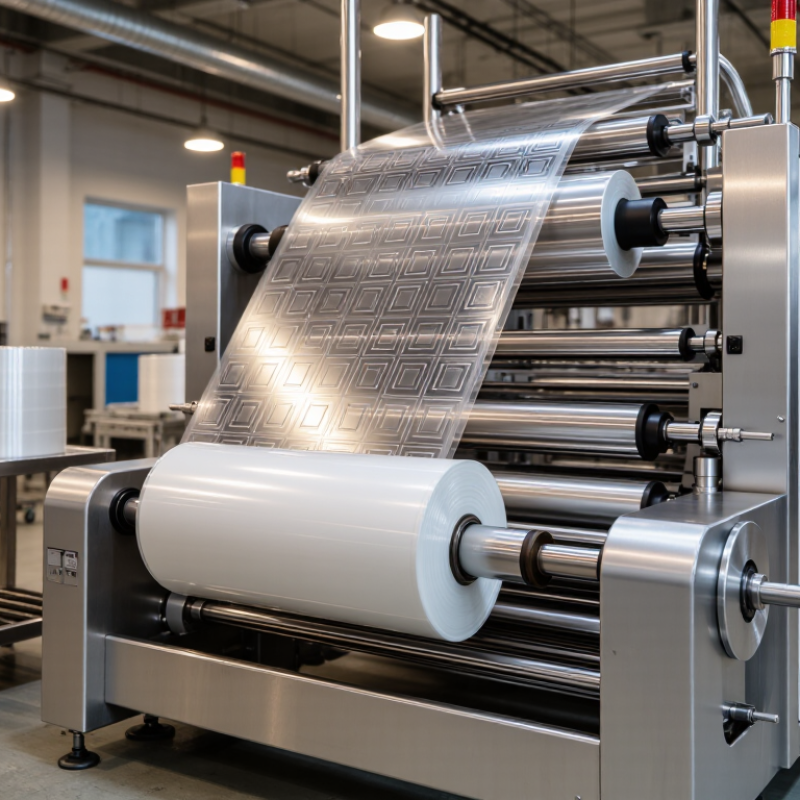
| Roll-to-roll rotary embosser | A patterned rotating roll forms a continuous texture in the moving film, typically by pressure and sometimes heat. | Continuous web; working widths and line speeds vary widely by line design and film properties. | Long production runs, repeating textures, and consistent web processing. | High production potential; continuous operation; repeatable patterns with suitable tension and roll control. | Pattern changes may require dedicated rolls; web tension, tracking, and roll alignment need careful setup. | Usable web width; line-speed range; roll diameter and runout; nip-load adjustment; tension and edge-guide systems; winding quality. |
| Heated calender embossing line | Heated rolls soften a thermoplastic film surface while a patterned roll and nip pressure create the texture. | Continuous web; operating temperature and speed depend on polymer, film thickness, and pattern depth. | Thermoplastic films requiring deeper or more permanent surface relief. | Suitable for continuous processing; heat and nip settings can be tuned to the material and desired texture. | Excess heat or pressure can distort, thin, or stick the film; cooling and release behavior may affect the final texture. | Roll-temperature range and uniformity; nip-load range; cooling capacity; film thickness window; release surface; line-speed control. |
| UV micro-embossing line | A transparent patterned tool forms a UV-curable coating; ultraviolet exposure cures the coating before or during release. | Often continuous roll-to-roll; practical speed depends on coating chemistry, UV dose, lamp or LED output, and web width. | Fine optical or functional microstructures and surface patterns formed in a curable coating. | Can reproduce fine features; avoids relying on bulk film softening to form the relief. | Requires compatible resin and release surfaces; cure uniformity, oxygen inhibition, and coating defects need control. | UV wavelength and delivered dose; irradiance uniformity; coating thickness control; tool-release performance; line speed; web tension. |
| Intermittent roll-fed embossing press | A roll-fed web stops or indexes for each impression; a heated or unheated die applies the pattern. | Roll-fed, indexed processing; effective output depends on repeat length, press cycle, and registration requirements. | Repeated localized patterns, short-to-medium runs, and jobs requiring accurate placement on a web. | Combines roll feeding with controlled, discrete impressions; can support registration to printed features. | Indexing limits throughput; start-stop motion can affect web handling and registration at higher speeds. | Index accuracy; repeat length; cycle rate; registration system; die size; feed and take-up tension control. |

.svg)