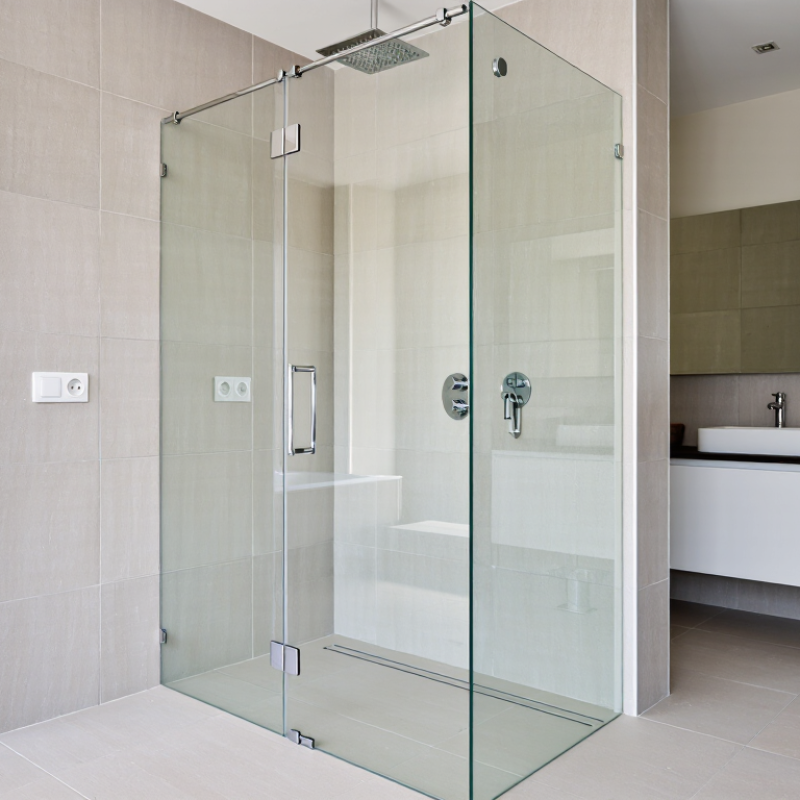
| Clear Tempered Glass | Uses a transparent, heat-treated panel to separate the shower area while allowing unobstructed views. | 6–10 mm | Tempered glass is stronger than ordinary annealed glass and breaks into smaller, less sharp pieces when shattered. | Low | Approximately 80–90% | Easy to clean, although water spots and soap residue are highly visible. | Bright bathrooms, frameless enclosures, and spaces that benefit from a visually open design. |
| Low-Iron Clear Glass | Reduces the green tint normally visible in standard clear glass, producing a cleaner and more neutral appearance. | 6–10 mm | Usually manufactured as safety-tempered glass for shower applications. | Low | Approximately 90% or higher, depending on thickness and surface treatment | Similar to clear glass; mineral deposits may be more noticeable because of its very clear appearance. | Minimalist bathrooms where accurate tile and hardware colors are important. |
| Frosted Glass | Uses a chemically etched, sandblasted, or permanently textured surface to scatter light and obscure outlines. | 6–10 mm | Can be safety-tempered; the frosting itself does not determine impact strength. | Medium to high | Approximately 55–75% | Textured areas can hold residue and may require gentle, regular cleaning. | Bathrooms where privacy is more important than a fully transparent enclosure. |
| Patterned or Textured Glass | Uses a raised or patterned surface to distort visibility while admitting natural or artificial light. | 6–8 mm | Safety performance depends on whether the panel is tempered or laminated and on local building requirements. | Medium to high | Approximately 50–80%, depending on the pattern | More difficult to clean than smooth glass because texture can collect soap and mineral deposits. | Decorative shower screens and designs requiring visual separation. |
| Tinted Glass | Uses color throughout the glass to reduce glare and create a darker, more private visual effect. | 6–10 mm | Must be specified as safety glass for shower use; color alone does not make glass safer. | Medium | Approximately 35–75%, depending on tint color and depth | Generally smooth and easy to clean; water marks may contrast with darker colors. | Contemporary bathrooms, glare reduction, and coordinated interior color schemes. |
| Laminated Glass | Combines two glass layers with a plastic interlayer that helps hold fragments together if the glass breaks. | Typically 6–10 mm total, depending on construction | Provides post-breakage fragment retention; the exact safety classification should be confirmed for the intended installation. | Low to high, depending on the interlayer and surface design | Approximately 70–90%, depending on glass and interlayer selection | Requires care around exposed edges and seals; smooth surfaces are relatively easy to maintain. | Projects prioritizing fragment retention, acoustic control, or specialized privacy effects. |
| Rain or Water-Effect Glass | Uses vertical or irregular texture to diffuse shapes and create a flowing visual effect while allowing light through. | 6–8 mm | Should be safety-tempered or otherwise approved for shower use according to local requirements. | Medium to high | Approximately 60–80% | Texture can make wiping more demanding, especially in hard-water areas. | Privacy-focused shower doors and decorative bathroom partitions. |

.svg)