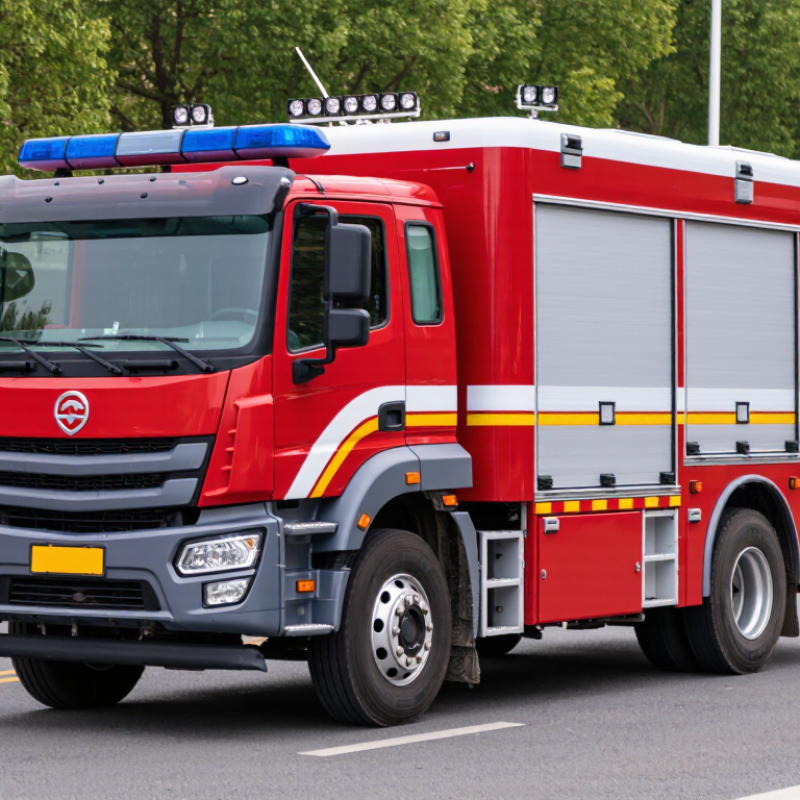
| Typical Primary Use | Patient transport, basic emergency medical care, and urban response | Road rescue, fire support, disaster response, and multi-equipment deployment | Incident command, communications, extended operations, and specialist coordination | Match the vehicle to the mission rather than paying for equipment that will rarely be used. |
| Indicative Purchase Price | USD 80,000–180,000 | USD 180,000–450,000 | USD 350,000–900,000+ | Final pricing depends on chassis, medical or rescue equipment, communications systems, local taxes, and certification requirements. |
| Typical Gross Vehicle Weight | 3.5–7.5 tonnes | 7.5–18 tonnes | 18–30+ tonnes | Weight affects driving-licence requirements, road access, payload, fuel use, and operating restrictions. |
| Usable Payload After Conversion | Approximately 700–2,000 kg | Approximately 2,000–7,000 kg | Approximately 5,000–12,000 kg | Payload must include crew, patients, water, fuel, tools, medical equipment, batteries, and future additions. |
| Typical Fuel Consumption | Approximately 10–16 L/100 km | Approximately 18–35 L/100 km | Approximately 25–50 L/100 km | Actual consumption varies with vehicle weight, engine, terrain, idling time, emergency driving, and climate-control use. |
| Annual Mileage Assumption | 20,000–50,000 km | 10,000–30,000 km | 5,000–20,000 km | Lower-mileage command vehicles may still incur substantial costs from idling, generator use, inspections, and equipment servicing. |
| Five-Year Operating Cost | USD 45,000–130,000 | USD 80,000–240,000 | USD 120,000–350,000 | Estimate includes fuel, scheduled maintenance, tyres, inspections, and routine equipment servicing; it excludes major accident repairs. |
| Five-Year Total Cost of Ownership | Approximately USD 125,000–310,000 | Approximately USD 260,000–690,000 | Approximately USD 470,000–1,250,000+ | Total cost combines purchase price and five-year operating cost before financing, tax, insurance, and resale value. |
| Emergency Medical Compliance | May require compliance with EN 1789 or the applicable national ambulance standard | Usually requires rescue-body, seating, storage, and equipment compliance under the destination jurisdiction | Usually requires vehicle, electrical, accessibility, communications, and workplace-safety compliance | Standards are jurisdiction-specific. Request current certificates and verify that they apply to the complete finished vehicle. |
| Road and Vehicle Compliance | Vehicle type approval, braking, lighting, emissions, seat-belt, and electrical requirements | Vehicle type approval, axle-load limits, braking performance, lighting, emissions, and body-security requirements | Vehicle type approval, axle-load limits, emissions, braking, electrical safety, accessibility, and communications requirements | Chassis compliance alone does not prove that the converted emergency vehicle is legally road-ready. |
| Electrical System | Dual batteries, shore power, inverter, medical sockets, and auxiliary lighting | High-capacity auxiliary batteries, generator or inverter system, scene lighting, and tool connections | Redundant power distribution, generator capacity, communications equipment, climate control, and battery monitoring | Specify continuous load, peak load, backup duration, charging method, and protection against overload or low voltage. |
| Maintenance Complexity | Low to moderate; widely available commercial-vehicle service support | Moderate to high; requires chassis, hydraulic, rescue, and electrical expertise | High; specialist electrical, HVAC, communications, and generator maintenance may be required | Local service capability can reduce downtime more effectively than a lower initial purchase price. |
| Expected Service Life | Approximately 8–12 years with disciplined maintenance | Approximately 10–15 years with scheduled structural and equipment inspections | Approximately 12–18 years, subject to technology upgrades and body-condition inspections | Service life depends on corrosion control, mileage, duty cycle, preventive maintenance, and availability of replacement parts. |
| Resale and Upgrade Potential | Generally good when mileage, interior condition, and service records are documented | Moderate; value depends heavily on body condition, equipment compatibility, and payload margin | Variable; older communications, power, and control systems can reduce resale value | Choose modular equipment, accessible wiring, and standard interfaces to make future upgrades easier. |
| Best Choice When | Fast urban access, patient transport, and controlled operating costs are priorities | One vehicle must carry substantial tools, crew, and rescue equipment | Large incidents require sustained command, coordination, and on-site support | The best long-term value comes from sufficient capability without excessive unused capacity. |
| Main Risk to Check | Overloading after adding medical equipment, staff, fuel, and oxygen cylinders | Insufficient axle-load margin, complex maintenance, and restricted access in dense urban areas | High acquisition cost, high idle-time cost, and rapid obsolescence of electronics | Conduct a fully loaded weight test, compliance review, and total-cost assessment before purchase. |

.svg)