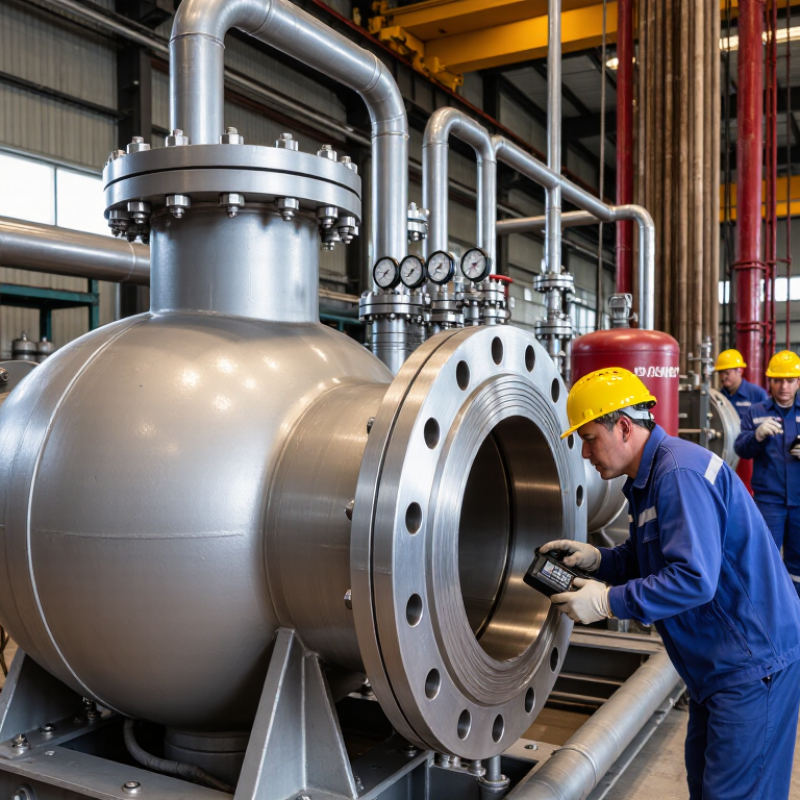
| Bladder Discharge Pulsation Dampener | Discharge manifold of triplex or quintuplex mud pumps | 3,000–15,000 psi
207–1,034 bar | 10–100 gal
38–379 L | 2–6 in nominal bore; flanged or threaded designs are available | Reduces discharge-pressure pulsation, vibration, and stress on the fluid end and discharge line | Forged or cast pressure shell with replaceable elastomer bladder and gas charging valve | Pump flow rate, discharge pressure, mud density, temperature, bladder compatibility, and allowable pressure fluctuation |
| Diaphragm Discharge Dampener | High-pressure discharge piping and compact pump packages | 1,500–10,000 psi
103–689 bar | 1–30 gal
3.8–114 L | 1–4 in nominal bore | Separates the process fluid from the gas chamber while smoothing periodic flow surges | Metal pressure body with reinforced elastomer or composite diaphragm | Diaphragm stroke, fatigue resistance, chemical compatibility, service temperature, and inspection access |
| Suction Stabilizer | Suction manifold, suction line, or charging system upstream of the pump | 150–1,500 psi
10–103 bar | 10–80 gal
38–303 L | 4–12 in nominal bore | Improves suction flow uniformity and helps reduce acceleration losses, vibration, and cavitation risk | Large-volume gas-charged chamber, commonly with a bladder or flexible diaphragm | Suction pressure, available net positive suction head, line diameter, pump speed, and suction-line layout |
| Inline Compact Pulsation Dampener | Near the pump discharge outlet or within a compact skid | 1,000–7,500 psi
69–517 bar | 1–15 gal
3.8–57 L | 1–3 in nominal bore | Provides local pulsation control where installation space is limited | Compact steel housing with bladder, diaphragm, or gas-charged chamber | Available clearance, pressure drop, mounting orientation, connection rating, and maintenance accessibility |
| High-Temperature Pulsation Dampener | Discharge or suction service with elevated mud temperature | Up to approximately 10,000 psi
689 bar; design-dependent | 10–60 gal
38–227 L | 2–6 in nominal bore | Maintains pulsation control when standard elastomer materials would lose strength or service life | Heat-treated pressure body with high-temperature elastomer or reinforced diaphragm | Maximum fluid temperature, gas precharge temperature correction, elastomer compound, cooling arrangement, and seal life |
| Key Specification | Recommended Design Basis | Typical Engineering Range | Measurement Unit | Why It Matters | Technical Notes |
| Rated Pressure | Select a rating equal to or higher than the system maximum working pressure | 3,000–15,000 psi | psi or bar | Prevents overpressure and supports safe operation | The pressure rating must include the effects of pressure spikes, temperature, corrosion allowance, and applicable pressure-vessel requirements. |
| Gas Precharge | Set according to the minimum operating pressure and dampener design | Often 60–80% of minimum operating pressure for discharge service | psi or bar | Controls gas volume available for absorbing flow fluctuations | Use dry nitrogen unless the equipment documentation specifies otherwise. Never use oxygen or combustible gases for precharging. |
| Elastomer Material | Match the material to the drilling fluid, additives, oil content, and temperature | NBR, HNBR, EPDM, or FKM, depending on service | Material designation | Influences chemical resistance, flexibility, fatigue life, and sealing performance | Material selection should be confirmed against the actual mud formulation and continuous operating temperature rather than pressure alone. |
| Pressure Connection | Use a connection compatible with the pump manifold and pressure class | 1–6 in nominal bore | in, mm, or flange class | Ensures mechanical fit, pressure integrity, and easier maintenance | Connection type, bore size, flange rating, bolt pattern, and orientation must be verified from the pump and piping drawings. |
| Maintenance Features | Provide safe gas charging, pressure isolation, and inspection access | Replaceable bladder or diaphragm; serviceable gas valve | Design feature | Reduces downtime and supports regular precharge checks | Depressurize and isolate the fluid side before service. Precharge should be checked periodically and after bladder or diaphragm replacement. |

.svg)