What Is a Sewer Inspection Camera and How Does It Work?
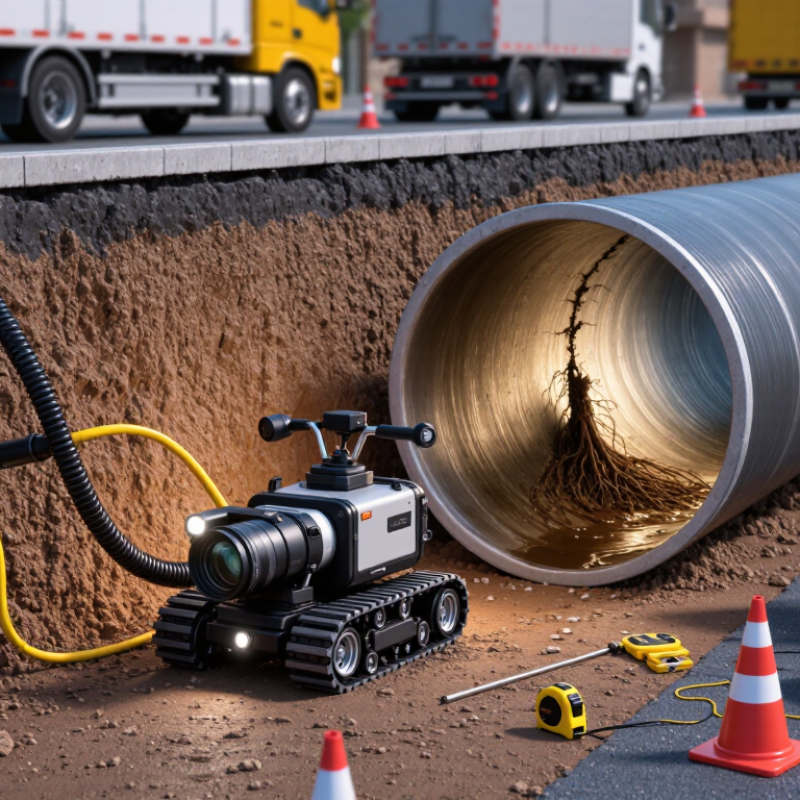
A sewer inspection camera is a small, waterproof camera attached to a flexible push cable. An inspector feeds the cable through a cleanout, drain opening, or access point. Bright LED lights illuminate the pipe interior, even when the surrounding space is completely dark. The camera sends live video to a monitor above ground.
The operator slowly guides the camera through the line while watching for cracks, root growth, collapsed sections, grease buildup, or standing water. A built-in distance counter shows how far the camera has traveled. Many systems also include a locating transmitter near the camera head. When needed, a handheld receiver can identify the camera’s position beneath a floor, yard, or paved surface.
Movement requires patience. Too much force can damage the cable or push it past a blockage. Too little force may prevent a complete inspection. The operator often rotates the cable to view pipe joints and side connections. Clear footage matters, but interpretation is not always perfect. Dirty water, heavy corrosion, and poor lighting can hide important details.
A skilled inspector records observations with measurements and practical notes. The video may reveal a problem, but it cannot always explain its full cause. For example, a small opening could result from age, shifting soil, or earlier repairs. Professional judgment remains essential. Conditions can change after inspection, so findings should be reviewed carefully before selecting repair work.

.svg)