| Organic Certification | The supplier and the processing facility should be covered by a valid organic certificate recognized in the destination market. | Certification should match the intended market, such as USDA organic requirements for the United States or EU organic requirements for the European Union. | Current organic certificate, certificate scope, issuing body, validity date, product list, and transaction certificate when required. | Critical |
| Raw Material Origin | Sweet potatoes should be traceable to approved organic farms or documented collection areas. | Lot-level traceability from farm or grower group through washing, slicing, drying, milling, and packing. | Farm or grower records, harvest information, lot codes, approved-supplier list, and traceability exercise results. | Critical |
| Processing Method | The powder should be produced using a controlled drying and milling process without unauthorized additives, carriers, or preservatives. | Processing conditions should be documented, with product specifications clearly stating whether the powder is raw, heat-treated, or otherwise processed. | Process flow chart, ingredient statement, allergen statement, equipment-cleaning records, and change-control procedure. | Critical |
| Moisture Content | Low and consistent moisture helps reduce caking, microbial growth, and shelf-life problems. | A practical commercial target is often approximately 5% to 8%, subject to the agreed specification and processing method. | Recent certificate of analysis, moisture test method, batch results, and accelerated shelf-life or stability data where available. | High |
| Particle Size | Particle size should suit the intended use, including beverages, bakery products, nutritional mixes, or instant formulations. | Common commercial specifications may include approximately 60 to 100 mesh, but the final requirement should be confirmed during application testing. | Sieve analysis, particle-size distribution, sample specification, and application trial results. | Medium |
| Microbiological Safety | The product should meet the microbiological limits required by the destination country and the buyer's food-safety program. | Testing commonly includes total plate count, yeast and mold, coliforms, and pathogens such as Salmonella; exact limits depend on jurisdiction and end use. | Lot-specific microbiological report from an accredited laboratory, sampling plan, sanitation records, and environmental-monitoring summary. | Critical |
| Contaminant Control | Organic status does not remove the need to control heavy metals, pesticide residues, mycotoxins, and foreign materials. | Results should comply with applicable legal limits in the importing market; risk-based testing frequency should be documented. | Multi-residue pesticide report, heavy-metal analysis, mycotoxin results where relevant, foreign-material controls, and corrective-action records. | Critical |
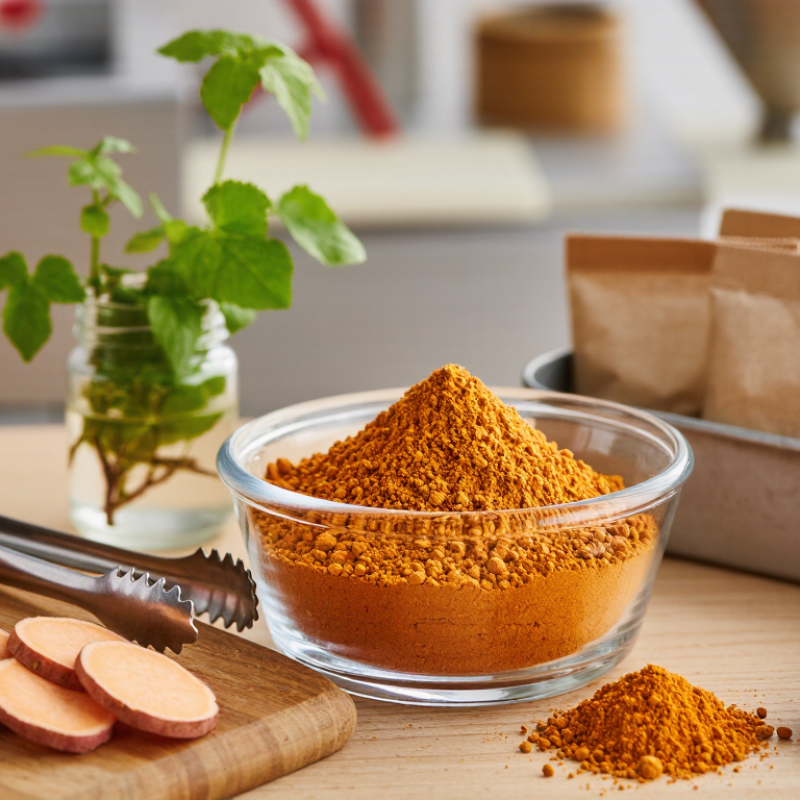
| Color, Aroma, and Flavor | The powder should have a clean sweet-potato aroma and a characteristic color without burnt, musty, chemical, or fermented notes. | Color may range from cream to orange or reddish-orange depending on cultivar and processing; the approved reference sample should define acceptance. | Retained reference sample, sensory evaluation form, color measurement if used, and batch-to-batch comparison records. | Medium |
| Food-Safety System | The facility should operate a documented food-safety management system appropriate for dried agricultural ingredients. | Evidence may include HACCP-based procedures, good manufacturing practices, internal audits, recall procedures, and supplier-approval controls. | Food-safety certificate where applicable, audit report, HACCP plan, recall test, sanitation program, and pest-control records. | High |
| Packaging and Storage | Packaging should protect the powder from moisture, oxygen, light, pests, and cross-contamination during transport and storage. | Food-contact packaging with a suitable moisture barrier; storage should generally be cool, dry, clean, and protected from direct sunlight. | Packaging specification, food-contact declaration, storage conditions, palletization details, and transport-protection plan. | High |
| Shelf Life | The supplier should provide a defined shelf life supported by product and packaging data. | Many dried vegetable powders are assigned approximately 12 to 24 months when properly packed and stored, but the approved period must be supported by evidence. | Shelf-life statement, stability data, recommended storage temperature and humidity, and “best before” coding procedure. | High |
| Minimum Order Quantity | The minimum order should be compatible with forecast demand, trial requirements, and inventory capacity. | Commercial minimums vary widely by packing format and production schedule; confirm sample, pilot, and regular-order quantities separately. | Written quotation, sample policy, pilot-order terms, production lead time, and price-break schedule. | Medium |
| Batch Consistency | Repeated lots should remain consistent in moisture, particle size, color, flavor, microbiology, and nutritional values. | Use an approved specification with defined tolerances and require a certificate of analysis for every commercial lot or an agreed testing frequency. | Three or more consecutive batch reports, retained samples, specification sheet, deviation records, and corrective-action procedure. | High |
| Commercial Reliability | The supplier should communicate clearly, disclose changes promptly, and provide realistic production and shipping schedules. | Evaluate response time, sample accuracy, on-time delivery history, export experience, and ability to support documentation requests. | Supplier questionnaire, reference checks without relying solely on marketing claims, delivery records, complaint log, and service-level agreement. | High |

.svg)