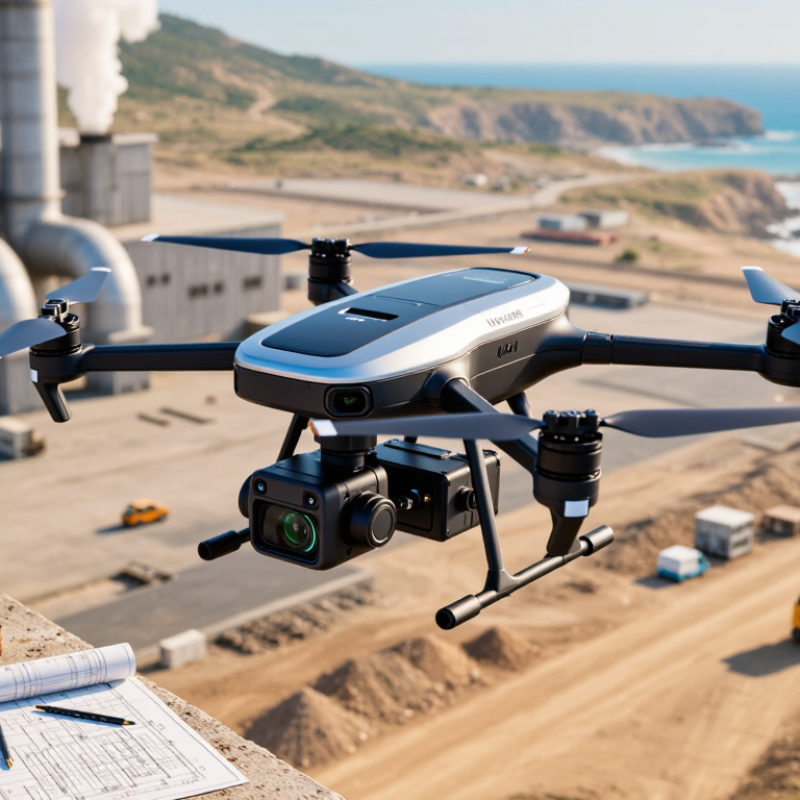
| 1. Define the gases and measurement goals | Confirm which gases or vapors need to be detected, the expected concentration range, required detection limits, and whether readings are needed continuously or at specific locations. | Compare the sensor’s stated measurement range, resolution, response time, and operating conditions with the site’s monitoring requirements. Check whether the sensor can detect the target substance in the expected environment. |
| 2. Check sensor performance and limitations | Review the sensing technology, accuracy specifications, cross-sensitivity to other substances, temperature and humidity limits, and any warm-up or stabilization requirements. | Request the sensor’s technical documentation and test it against suitable reference gas or a validated test method. Confirm how the system indicates out-of-range readings, sensor faults, and overdue calibration. |
| 3. Evaluate flight and operational safety | Look for appropriate obstacle awareness, return-to-home behavior, low-battery warnings, loss-of-link procedures, emergency landing options, and clear status alerts. | Review the operating manual and conduct controlled tests in a safe area. Check that the aircraft’s payload does not prevent it from maintaining the required flight stability or safe operating time. |
| 4. Confirm regulatory and site requirements | Drone rules vary by country and may cover pilot qualifications, registration, airspace, line of sight, flights near people, and operations at night. Worksites may also have separate rules for hazardous areas. | Check the applicable aviation authority’s current requirements and the site’s safety procedures before purchase and deployment. A gas sensor does not make a drone safe to fly in a potentially explosive atmosphere; confirm any required hazardous-location certification for the complete aircraft and payload. |
| 5. Assess maintenance and calibration needs | Account for sensor calibration intervals, bump testing where applicable, replacement parts, battery care, propeller inspections, cleaning, and service availability. | Ask for a maintenance schedule, calibration procedure, expected consumable life, and records format. Confirm that calibration gases and servicing can be obtained and that maintenance can be documented for audits. |
| 6. Verify payload and system compatibility | Check payload weight, mounting method, power requirements, data connections, flight-controller compatibility, and whether sensor readings are synchronized with position and time. | Request a compatibility list and conduct an integration test using the intended aircraft, sensor, software, and communications equipment. Verify that data can be exported in a usable format and integrated with existing monitoring or mapping workflows. |
| 7. Review communications, training, and total operating cost | Consider control and telemetry range, coverage limitations, data security, operator training, spare batteries, software fees, insurance, and ongoing service costs. | Test the communications link in representative conditions and review how data is stored and shared. Compare total ownership costs over the expected service life, and ensure operators are trained for both flight procedures and gas-detection limitations. |

.svg)