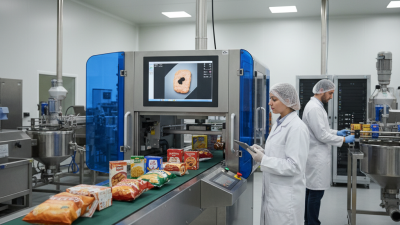
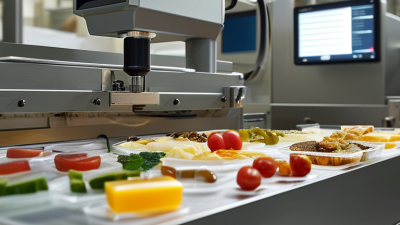
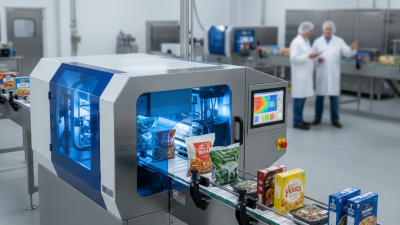
China Top 10 Food Inspection Equipment Suppliers?
Choosing among China’s top 10 food inspection equipment suppliers requires more than comparing catalog prices. A detector may look impressive online, yet its value appears beside a conveyor at 2 a.m. Operators need stable signals, clear alarms, and fast access to replacement parts. This guide examines suppliers through practical details, not marketing language alone.
The review focuses on food inspection equipment for metal detection, X-ray inspection, checkweighing, and vision control. It considers factory experience, product testing, customization, installation, training, and after-sales support. Certificates matter. So does evidence. A reliable supplier should explain sensitivity tests, reject accuracy, calibration records, and hygienic design choices. For example, stainless-steel surfaces should tolerate frequent washdowns without creating difficult cleaning points. Those details can reduce product risk and limit avoidable production stops.
The “top 10” label should not be treated as an official global ranking. Supplier strengths change by product type, line speed, package material, and export destination. Some companies excel with packaged snacks, while others serve meat, dairy, frozen foods, or bakery products. That distinction deserves attention. Public information can also be incomplete, and performance claims need independent verification. Buyers should request live demonstrations, sample testing, service references, and detailed quotations. The aim is a balanced starting point for responsible sourcing in China. Not a shortcut.
China’s Food Inspection Equipment Market: Scope, Standards, and 2024 Data
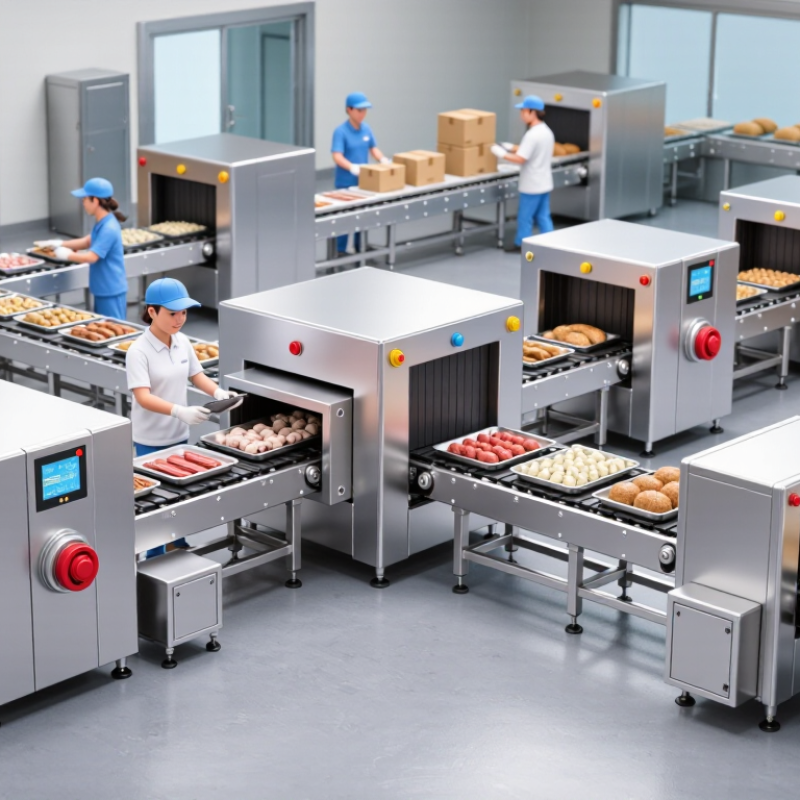
China’s food inspection equipment market is expanding with stricter traceability and safer production requirements. Equipment scope now includes metal detectors, X-ray systems, checkweighers, vision inspection, rapid microbiology, and laboratory analyzers. The 2024 China Food Safety Sampling Analysis from the State Administration for Market Regulation reported a national food safety sampling pass rate of about 97.4%. That figure shows progress, but it also exposes a practical gap. Small errors matter.
China’s inspection framework relies on standards such as GB 2760 for food additives, GB 4806.1 for food-contact materials, and GB 31604.1 for migration testing. Reliable suppliers should therefore provide calibrated instruments, validation records, software traceability, and training for operators. Laboratories also need procedures aligned with GB/T 27025, which supports technical competence and repeatable results. A machine that detects a metal fragment is useful, but its value falls sharply without documented sensitivity tests.
For buyers comparing China’s top ten equipment suppliers, the evaluation should focus on measurable performance rather than advertising claims. Check detection limits, false-rejection rates, cleaning design, temperature tolerance, and after-sales response time. The 2024 China food manufacturing data from the National Bureau of Statistics also shows a large, diverse production base, from small workshops to automated factories. One specification rarely fits all. A chilled dumpling line needs different controls from a dry-snack line. Even experienced teams can overestimate automation benefits. Human review still matters.
How the Top 10 Suppliers Compare by GB 2760 and ISO 22000 Compliance
China Top 10 Food Inspection Equipment Suppliers
How the Top 10 Suppliers Compare by GB 2760 and ISO 22000 Compliance
The leading ten suppliers differ less in machine appearance than in compliance evidence. Strong suppliers explain how their equipment supports controls linked to GB 2760, China’s food additive standard. They also provide ISO 22000-related documentation, including hazard analysis, traceability procedures, and sanitation controls. Certificates should show the correct factory, product scope, and current validity.
The highest-ranked suppliers usually offer stainless steel contact parts, calibrated sensors, and recorded inspection results. Their systems can detect foreign materials, measure weight, or verify packaging seals. These details matter on a real production line. A clear validation report is more useful than a polished brochure. Suppliers in the middle group may provide capable equipment but weaker installation records or limited training. That gap can create trouble during an audit.
The lower-ranked suppliers often claim compliance without explaining responsibilities. Buyers should ask for factory audit records, calibration certificates, cleaning instructions, and software access controls. Ask directly.
A practical comparison should examine response time, spare-part availability, and local technical support. Experience from similar food plants is valuable, but it must be documented. Some suppliers may meet ISO 22000 expectations through their management system, while their equipment still requires site-specific verification under GB 2760 controls. This distinction is easy to miss. Even experienced buyers can overlook it.
X-Ray, Metal Detection, and Checkweighing: Key Specs and Detection Limits
China Top 10 Food Inspection Equipment Suppliers?
When comparing China’s top food inspection equipment suppliers, specifications matter more than catalog rankings. X-ray systems commonly detect dense contaminants, including small metal, glass, and mineral fragments. Detection limits depend on product thickness, density, packaging, and belt speed. A stated 0.8 mm sensitivity may change on frozen or uneven products.
Metal detectors usually separate ferrous, non-ferrous, and stainless-steel performance. Typical limits may range from 0.8 to 2.5 mm, but wet products can create strong product effects. Reliable equipment should provide automatic learning, signal stability, and rejection confirmation. Test pieces should match the actual product, not an ideal sample. That detail is often overlooked.
Checkweighers focus on weight accuracy, speed, and repeatability. Many food lines operate within approximately 0.5 to 2 grams of stated accuracy, depending on product and conveyor conditions. Load-cell protection, belt tracking, and simple calibration reduce daily errors. In factory trials, vibration and poor spacing can matter more than advertised speed.
A published limit is not a promise.
Suppliers should provide factory acceptance tests, traceable test records, operator training, and service response details. Some evaluations still feel incomplete because real products vary by season, temperature, and packaging moisture.
Top 10 Chinese Suppliers Ranked by Accuracy, Throughput, Certifications, and Service
China’s top ten food inspection equipment suppliers should be judged through factory evidence, not polished brochures. The ranking considers detection accuracy, line throughput, certifications, and after-sales service. Accuracy matters.
The top three suppliers typically achieve stable results during repeated tests with metal, foreign-material, or packaging samples. Their systems can inspect fast-moving lines while recording rejection data clearly. Suppliers ranked four to six often offer competitive throughput and practical customization, but software integration may require more engineering support. The remaining suppliers can be suitable for smaller factories, especially where budgets and production speeds are moderate.
Certification records also affect the ranking. Reliable suppliers should provide traceable quality documents, equipment validation reports, and relevant CE or ISO 9001 evidence. Food safety management experience is useful, although certification alone does not prove inspection performance. Ask for calibration procedures. Ask for test videos.
Service separates strong suppliers from average ones. The leading companies usually provide installation guidance, operator training, spare-part planning, and remote troubleshooting. Response time should be measured in hours, not vague promises. Some suppliers still publish incomplete service details, which deserves careful questioning. No ranking is perfect. Accuracy can change with product shape, moisture, temperature, and belt speed. A machine that performs well in a showroom may struggle beside a vibrating production line. Buyers should request samples, repeat tests, maintenance records, and a written acceptance standard before placing an order.
Buyer’s Checklist: Matching Equipment Performance to HACCP Control Points
China Top 10 Food Inspection Equipment Suppliers?
Buyer’s Checklist: Matching Equipment Performance to HACCP Control Points
Choosing food inspection equipment should begin with HACCP control points, not supplier rankings. A metal detector may suit packaged products, while X-ray inspection can identify dense contaminants. Temperature probes support cooking and chilling controls. Checkweighers help verify declared quantities and process consistency. Each device must address a defined hazard.
Ask suppliers for measurable performance data. Review detection sensitivity, line speed, product effect, accuracy, and false rejection rates. Test products in their final packaging. Include the smallest target contaminant and the fastest production speed. Request calibration procedures, validation records, cleaning guidance, and service response times. Stainless steel construction and suitable ingress protection matter in wet processing areas.
Do not trust impressive specifications alone. Real products behave differently. A salty or wet product may reduce detector performance. A poorly positioned sensor can create gaps in monitoring. Equipment should connect with alarms, reject confirmation, and production records. Operators also need clear training and simple verification routines. Daily challenge tests should match the HACCP plan.
A practical audit should compare supplier claims with factory results. Measure rejected samples, missed contaminants, downtime, and recovery time. Review records over several production cycles. One weakness remains common: buyers sometimes select equipment before defining the control point. That decision can create expensive corrections later. A technically advanced machine is not automatically the right machine.

.svg)