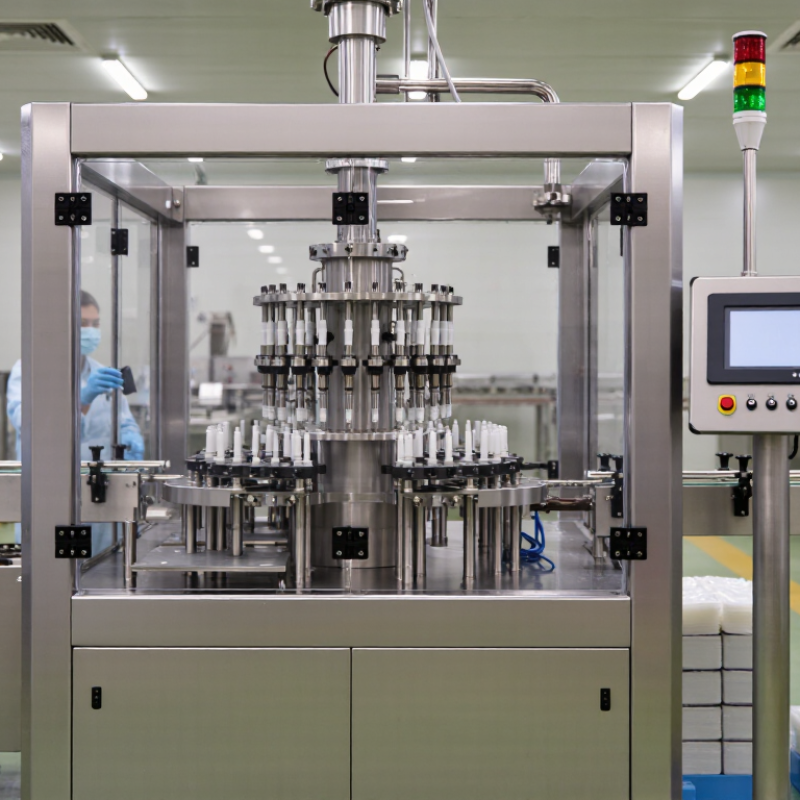
| 1. Package format | Depending on the machine, gel is filled into pre-made containers or formed packages such as sachets, pouches, or tubes. | Choose a format compatible with the intended product presentation, required package size, and downstream handling. | Confirm the supported package materials, dimensions, and whether containers are supplied pre-made or formed on the machine. |
| 2. Filling principle | A pump or metering unit draws product from a supply and dispenses a measured amount through a filling nozzle. | Check whether the dosing method is suitable for the gel’s viscosity, flow behavior, and target fill quantity. | Request test results using the actual product; confirm the stated dosing range and how accuracy is measured. |
| 3. Gel viscosity and flow | The product moves from the hopper or feed system to the filling head; its flow properties affect filling and cut-off behavior. | Consider the product’s viscosity, temperature sensitivity, and tendency to drip or string during dispensing. | Test at the intended product temperature and disclose any particulates, air sensitivity, or other relevant characteristics. |
| 4. Fill-volume adjustment | The metering system controls the amount delivered per cycle, with adjustment depending on the machine design. | Look for clear adjustment procedures and repeatable changeover between the required fill sizes. | Verify fill-weight or fill-volume results across repeated samples and ask how adjustments are recorded and checked. |
| 5. Package forming | On form-fill-seal equipment, packaging material is shaped into a package before or during filling, according to the machine layout. | Check forming compatibility with the selected film or laminate and with the intended package dimensions. | Confirm material requirements, forming-tool options, and sample-package quality using the proposed packaging material. |
| 6. Sealing method | Heat-sealing systems join compatible packaging layers by applying controlled heat and pressure for a set time. | Temperature control, pressure consistency, and seal-jaw condition can affect seal quality. | Validate seals with the actual material and product; agree on appropriate leak, visual, or seal-strength checks. |
| 7. Production speed | Output depends on the machine cycle, number of filling heads or lanes, package format, and operating conditions. | Assess sustainable production output rather than relying only on an advertised maximum cycle rate. | Request a run test using the required package and product, and clarify whether the quoted rate is theoretical or demonstrated. |
| 8. Product-contact parts | Product-contact components include parts such as the hopper, feed path, pump, and filling nozzle. | Accessible components and a suitable cleaning design help support routine sanitation and product changeovers. | Obtain a product-contact parts list, cleaning instructions, and material documentation appropriate to the application. |
| 9. Controls and changeover | Operators use machine controls to set or monitor relevant process parameters; changeover may involve adjustments or tooling changes. | Clear alarms, understandable controls, and documented setup procedures can reduce operator error and downtime. | Review the control functions, recipe handling, changeover steps, and training included with the equipment. |
| 10. Safety and support | Guards and safety devices help protect operators around moving parts and heated sealing areas. | Consider accessible emergency stops, guarding, maintenance access, spare-parts availability, and service arrangements. | Review the machine’s safety documentation, maintenance schedule, warranty terms, and support response arrangements. |

.svg)