Food Safety Insights

In Eagle’s Advanced Insights Blog, experts share their know-how by keeping you up-to-date with the latest trends to ensure your inspection equipment keeps your products safe. Eagle is an industry leader when it comes to performance and innovation, and we’ll share the news that’s important to you to enhance your quality assurance program.

Suggest topic you would like to see at:

sale@generalmachinery.org

Top 10 Stainless Steel Round Tube Types for Global Buyers

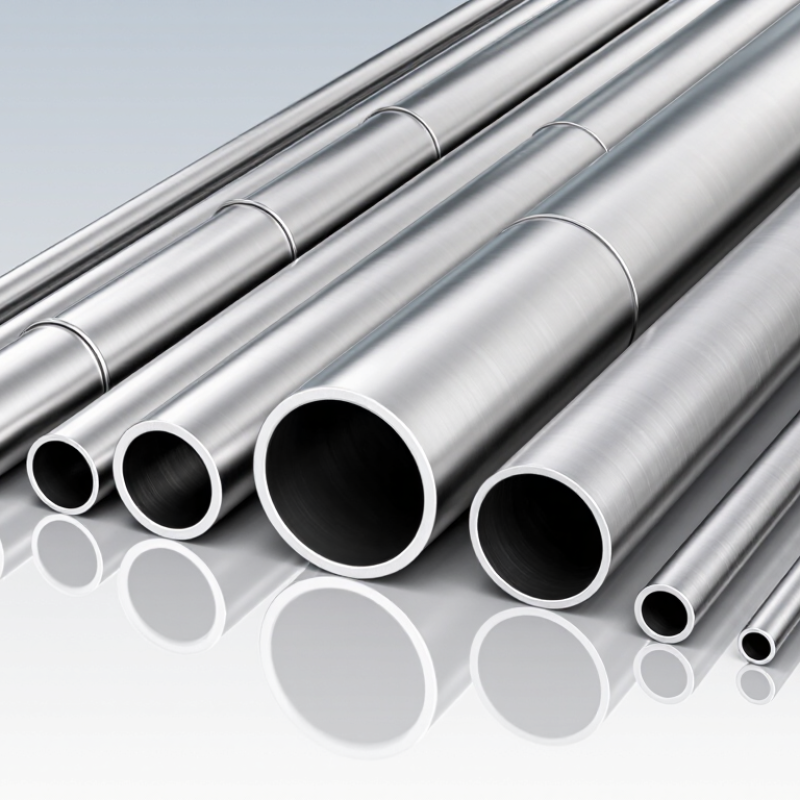
Choosing the right Stainless Steel Round Tube is not simply a matter of comparing prices. Global buyers must assess grade, outside diameter, wall thickness, surface finish, manufacturing method, and delivery consistency. A tube that performs well in a food-processing line may be unsuitable for coastal construction or high-temperature equipment.

Dr. J. R. Davis, editor of ASM Specialty Handbook: Stainless Steels, describes stainless steel as “iron-base alloys containing a minimum of about 11% chromium.” That chromium content supports passive corrosion resistance, but it does not make every tube corrosion-proof. This distinction matters. Chlorides, poor welding, trapped moisture, and rough surfaces can still cause failure.

The following guide examines ten Stainless Steel Round Tube types used across international markets. It compares common grades such as 304 and 316, along with welded, seamless, polished, sanitary, ornamental, and heat-resistant options. Each type has a practical place. None is perfect.

Look closely.

A reliable specification should state the grade standard, dimensions, tolerance, surface condition, test requirements, and packaging details. Buyers should also verify mill certificates, weld quality, inspection records, and supplier experience before placing large orders. Small omissions can become expensive problems at customs, during fabrication, or after installation.

Some choices remain difficult. The lowest price may hide thinner walls or inconsistent finishing. A premium surface may add little value in a concealed application. This guide therefore focuses on evidence, service conditions, and purchasing judgment—not attractive catalog language.

Top 10 Stainless Steel Round Tube Types for Global Buyers

AISI 304 and 304L Stainless Steel Round Tubes

For global buyers, AISI 304 and 304L stainless steel round tubes remain practical choices for food equipment, architectural frames, heat exchangers, and general fabrication. The International Stainless Steel Forum reported approximately 58.4 million tonnes of stainless crude steel production in 2023. This volume reflects strong worldwide demand, but it does not remove the need for careful tube selection.

AISI 304 usually offers about 18–20% chromium and 8–11% nickel. Its corrosion resistance suits humid interiors, kitchens, and light industrial environments. AISI 304L has a lower carbon limit, commonly 0.030% maximum under relevant product standards. That reduction helps limit carbide precipitation after welding. It is valuable for welded frames, handrails, and long tube assemblies. ASTM A269 is widely used for general-service tubing, while ASTM A213 covers seamless tubes for heat-transfer applications. Buyers should match the standard to service conditions.

Surface finish matters more than many purchasing teams expect. A polished tube can expose scratches beside bright lighting. A brushed finish can hide minor handling marks. Wall thickness, outside diameter, ovality, and weld quality should appear on inspection documents. I have seen specifications choose 304L automatically, even when welding was minimal. That adds cost without clear benefit. The opposite mistake is riskier: selecting 304 for heavily welded sections without checking post-weld corrosion exposure. Mill certificates, dimensional reports, and independent inspection provide stronger assurance than a grade name alone.

AISI 316 and 316L Stainless Steel Round Tubes

AISI 316 and 316L stainless steel round tubes remain practical choices for marine, chemical, food-processing, and architectural systems.

Their defining advantage is molybdenum, typically 2–3%, which improves resistance to chloride pitting.

The low-carbon 316L grade contains no more than 0.03% carbon under common specifications. This reduces sensitization risk after welding, although it does not make the tube immune to corrosion.

The World Stainless Association reported approximately 58.4 million tonnes of stainless steel production in 2023. That scale reflects sustained global demand, but buyers still need careful grade verification.

For pressure service, ASTM A312 is widely referenced for seamless and welded austenitic tubes. Fabricators often select welded 316L for larger diameters, while seamless tube suits demanding pressure applications.

Surface finish matters too. A bright annealed tube feels smooth and reflective, while a mechanically polished tube may better support hygienic cleaning.

In field inspections, chloride deposits often appear first near welds, clamps, and stagnant corners. Good drainage helps. Passivation can also remove free iron from fabrication surfaces, but it cannot correct poor design or contamination.

This is where specifications become imperfect. “316” alone says too little about wall thickness, heat treatment, tolerance, and testing.

Buyers should request mill certificates, PMI verification, weld inspection records, and corrosion-service details.

The NACE IMPACT study estimated global corrosion costs at about 3.4% of worldwide GDP, reminding engineers that a cheaper tube can become an expensive maintenance decision.

Ferritic and Martensitic Stainless Steel Round Tubes

Ferritic and martensitic stainless steel round tubes deserve closer attention from global buyers. World Stainless Association reported 58.4 million tonnes of stainless crude steel production in 2023. Yet production volume alone does not identify the right tube grade.

Ferritic tubes, including 409 and 430 families, offer magnetic behavior, moderate corrosion resistance, and limited nickel exposure. They suit exhaust systems, heat shields, and architectural supports. Martensitic tubes, such as 410 and 420 families, can gain higher hardness through heat treatment. This benefits shafts, wear-resistant frames, and selected fluid-handling components. They usually need stricter control of corrosion conditions.

Check the specification carefully. ASTM A268/A268M covers seamless and welded ferritic and martensitic stainless steel tubing. Ask for heat numbers, chemical analysis, tensile results, hardness data, and dimensional inspection records. Thin-wall tubes can fail during bending, even when chemistry looks correct. That is an easy mistake.

The International Organization for Standardization identifies chromium content as a key basis for stainless classification in ISO 15510. However, chromium percentage does not replace application testing. Buyers should compare weld quality, surface finish, ovality, and post-fabrication performance. Ferritic grades may become brittle in unsuitable forming conditions. Martensitic grades may lose corrosion resistance after improper heat treatment. Local standards, temperature, and media chemistry still matter. Specification discipline is essential.

Duplex and High-Performance Stainless Steel Round Tubes

Top 10 Stainless Steel Round Tube Types for Global Buyers

Duplex and high-performance stainless steel round tubes suit demanding services where chloride, pressure, and temperature challenge ordinary stainless steel. Duplex 2205 offers useful strength and corrosion resistance for desalination lines, heat exchangers, and offshore structures. Super duplex grades provide higher pitting resistance in severe seawater conditions. Their strength can reduce wall thickness, but fabrication becomes less forgiving.

High-performance options include 904L and 6Mo tubes. These grades handle aggressive acids, chlorides, and process fluids better than common austenitic grades. Buyers should review temperature, chloride concentration, pressure, and cleaning chemicals before selecting a grade. PREN values help compare pitting resistance. They do not replace real service data.

Weld quality matters greatly. A polished surface cannot hide poor heat control. Ask for solution-annealing records, positive material identification, dimensional reports, and hydrostatic test results. ASTM A789 or an equivalent specification may apply to duplex tubing, depending on the project. Check the exact standard. Requirements can differ between countries and industries.

Tube ends deserve attention. Cut ends may need deburring, beveling, or special protection during transport. Moisture trapped inside packaging can leave staining, especially in warm ports. It is not always structural damage, but it demands inspection. Some buyers focus heavily on price and overlook weld zones, tolerances, or documentation. That choice can create expensive rework later. Even experienced teams sometimes specify a grade correctly, then miss the finishing condition.

Global Selection Criteria for Stainless Steel Round Tubes

Top 10 Stainless Steel Round Tube Types for Global Buyers

Global buyers should compare more than grade and outside diameter. The top ten choices include welded 304, seamless 304, welded 316, seamless 316, 321, 310S, duplex 2205, ferritic 430, sanitary polished, and precision cold-drawn tubes. Each type serves a different environment. Welded tubes often reduce cost, while seamless tubes suit higher pressure and demanding inspection requirements. Cold-drawn tubes provide tighter tolerances for hydraulic and instrumentation systems.

The International Stainless Steel Forum reported approximately 62.2 million tonnes of global stainless crude steel production in 2024. This scale supports broad availability, but supply volume does not guarantee suitable quality. Buyers should verify chemical composition through mill test certificates and confirm compliance with ASTM, EN, or ISO specifications. Check wall thickness, ovality, surface roughness, weld quality, and corrosion testing. Small details matter.

Coastal projects usually need molybdenum-bearing 316 or duplex 2205. High-temperature equipment may require 321 or 310S. Decorative interiors often favor polished 304 or 430. Food-processing applications demand clean internal surfaces, controlled roughness, and traceable cleaning procedures. According to the World Stainless Association’s application guidance, lifecycle performance should influence material selection, not only purchase price. I would not treat grade alone as proof of suitability. Transport packaging, heat numbers, inspection records, and destination-country documentation can still expose weak purchasing decisions. A cheaper tube can become expensive after premature replacement.

Top 10 Stainless Steel Round Tube Types for Global Buyers

Global selection criteria: representative chromium content by commonly specified stainless steel grade

How global buyers compare these tube types: Chromium content supports stainless steel’s passive corrosion-resistant surface, while final selection also depends on chloride exposure, temperature, weldability, forming requirements, wall thickness, applicable ASTM or EN standards, and total cost. The values shown are representative midpoints of typical grade chemistry ranges in weight percent; exact limits vary by product standard and tube specification.

Any Questions? We Are Here for You

Contact Us

Contact Us

Request information

Ask us a question
Service Support

Service Support

Available 24 hours a day, 7 days a week.

Get in Touch
Find a representative

Find a representative

Contact your local representative

View Locations