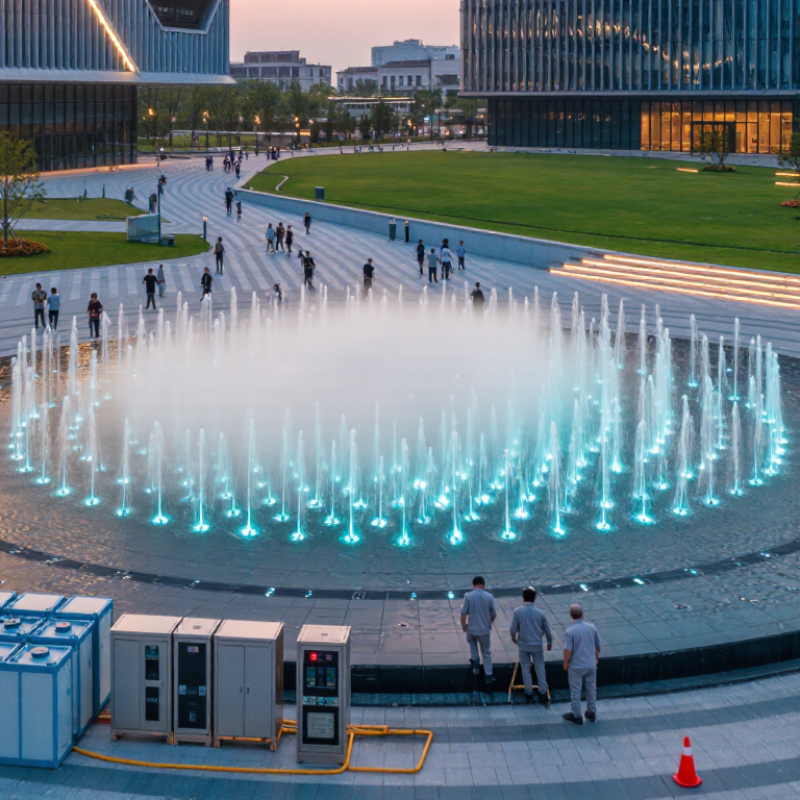
| Typical application | Retail displays, exhibitions, hospitality interiors, temporary events | Theme parks, hotel gardens, public plazas, restaurants, landscape projects | Cultural venues, resort developments, municipal projects, permanent attractions | Request reference installations with similar climate, operating hours, and visitor traffic. |
| Approximate fog output | About 0.5–3 L/min, depending on nozzle count and pump configuration | About 2–15 L/min for multi-nozzle systems | 15 L/min and above; engineered to the site’s coverage and visual effect | Confirm whether the figure means water consumption, rated flow, or visible fog output. |
| Common operating pressure | Approximately 40–70 bar for fine misting configurations | Approximately 50–100 bar, depending on nozzle design and desired fog density | Often engineered above 70 bar, subject to pump, piping, and safety requirements | Check pump rating, pressure at the most distant nozzle, relief protection, and noise level. |
| Nozzle and droplet specification | Fine mist nozzles; commonly specified around 5–20 micrometres under test conditions | Multiple anti-drip or clog-resistant nozzles; droplet size varies by pressure and water quality | Project-specific nozzle layout, zoning, filtration, and control strategy | Ask for nozzle material, spray-angle data, anti-drip performance, and replacement availability. |
| Water treatment and filtration | Basic sediment filtration; soft or filtered water is usually recommended | Multi-stage filtration is commonly required to reduce nozzle blockage and scale | May include automatic flushing, water treatment, dosing, and water-recovery systems | Confirm maximum TDS, hardness limits, filter micron rating, drainage, and cleaning intervals. |
| Control options | Manual switch, timer, basic remote control, or simple sensor | Programmable controller, DMX compatibility, wind sensor, and zone control may be available | Integrated PLC, show control, weather sensors, remote monitoring, and custom interfaces | Verify communication protocols, software ownership, remote-access security, and local support. |
| Electrical configuration | Commonly 110–120 V or 220–240 V, single-phase, subject to destination market | Single-phase or three-phase power; voltage and frequency must be specified before production | Engineered electrical cabinet with site-specific load calculations and protection | Confirm voltage, frequency, phase, IP rating, grounding, overload protection, and local code compliance. |
| Enclosure and material options | Powder-coated steel, stainless steel, or compact polymer enclosures | Typically stainless steel or corrosion-protected metal for outdoor use | Marine-grade stainless steel, custom frames, concealed pipework, and architectural finishes | Request material grade, coating thickness, corrosion test information, and enclosure ingress protection. |
| Indicative manufacturing lead time | About 15–30 working days after payment and specification approval | About 30–60 working days, depending on customization and testing | Approximately 60–120 or more working days for engineering, fabrication, and factory testing | Separate design approval, production, inspection, export packing, and shipping time in the schedule. |
| Minimum order quantity | Often one complete unit for standard models | Often one project set; replacement parts may have separate minimum quantities | Project-based; quantity is normally determined by site design and bill of materials | Confirm whether samples, spare nozzles, filters, and control cabinets are included in the quoted quantity. |
| Quality and compliance documents | Electrical test report, user manual, packing list, and applicable conformity documents | Factory test records, wiring diagrams, material details, and destination-market documentation | Approved drawings, risk assessment, factory acceptance test, commissioning documents, and maintenance plan | Check document validity, testing scope, destination-country requirements, and whether certificates cover the supplied model. |
| Packaging and export handling | Export carton or plywood crate, depending on weight and transport mode | Moisture protection, shock protection, labeled components, and reinforced export packing | Crated modules with lifting points, marked connection points, and installation documentation | Confirm crate dimensions, gross weight, HS classification, shipping terms, and responsibility for customs clearance. |
| After-sales service | Remote troubleshooting, spare-part supply, and basic operating instructions | Commissioning guidance, maintenance schedule, replacement parts, and technical support | Site engineering, commissioning, operator training, preventive maintenance, and service-level arrangements | Compare warranty duration, response time, spare-part prices, training scope, and local service capability. |

.svg)