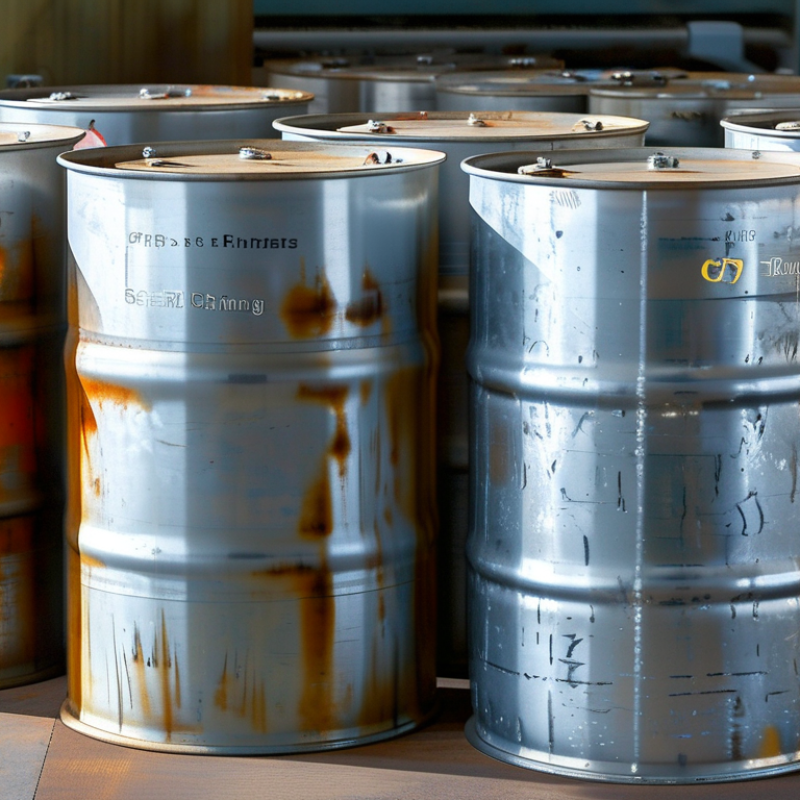
| Standard Capacity | Common nominal sizes include 20 L, 25 L, 30 L, 60 L, 110 L, 200 L, and 208 L. The 208 L size is widely associated with the nominal 55-gallon drum. | Industrial liquids, coatings, lubricants, chemicals, powders, and process materials. | Confirm actual working capacity, headspace, external dimensions, pallet quantity, and filling-line compatibility before ordering. |
| Drum Construction | Carbon-steel body with a zinc coating applied by methods such as hot-dip galvanizing or electro-galvanizing; closed head with two bung openings is common. | Outdoor storage, general industrial packaging, agricultural products, and non-corrosive or compatible chemical products. | Ask for coating type, coating thickness or mass, seam construction, body thickness, and resistance data for the intended contents. |
| Closure Configuration | Usually fitted with a 2-inch bung and a 3/4-inch bung, using threaded plugs, gaskets, and tamper-evident or dust-control features as required. | Liquid filling, dispensing, sampling, blending, and controlled material transfer. | Check bung thread standards, gasket material, torque requirements, venting needs, and compatibility with pumps or adapters. |
| UN Performance Certification | For regulated dangerous goods, the drum may require a UN specification marking that identifies packaging type, performance level, specific gravity or test pressure, year, and approval authority. | Flammable liquids, corrosive materials, toxic substances, and other regulated hazardous goods. | The UN marking must match the material, packing group, closure system, transport mode, and applicable regulations. Certification should be verified rather than assumed. |
| UN Packing Groups | UN packaging performance levels are generally associated with Packing Group I for high danger, II for medium danger, and III for low danger, when applicable. | International and domestic transport of hazardous materials. | Select packaging based on the product's official classification and required performance level, not solely on drum capacity or steel thickness. |
| Chemical Compatibility | Galvanized steel is often suitable for many oils, greases, and neutral materials, but zinc coatings may be attacked by strong acids, strong alkalis, and certain chemical formulations. | Lubricants, mineral oils, selected solvents, industrial additives, and compatible dry goods. | Review the safety data sheet, conduct compatibility testing, and obtain written confirmation for aggressive, acidic, alkaline, aqueous, or high-purity products. |
| Pressure and Venting | Most standard closed head drums are atmospheric containers and are not intended to store pressurized contents. Vented closures may be available for products that release gas. | Temperature-sensitive liquids, materials that may generate vapor, and products requiring controlled pressure equalization. | Never pressurize a standard drum unless it is specifically designed and certified for that service. Evaluate thermal expansion, gas generation, and vent placement. |
| Handling and Stacking | Drums may be handled with drum clamps, forklifts, pallets, or drum trucks. Stackability depends on design, load, closure condition, and storage environment. | Warehouses, distribution centers, manufacturing plants, and bulk material storage areas. | Use approved pallets, keep drums upright, protect bung areas, follow the supplier's stacking limits, and inspect for dents, corrosion, or leakage. |
| Fire and Static Control | Steel drums are conductive, but the full transfer system must be correctly bonded and grounded when handling flammable liquids or combustible vapors. | Solvents, fuels, coatings, cleaning chemicals, and other flammable liquids. | Follow site fire procedures, eliminate ignition sources, use suitable dispensing equipment, and provide ventilation and personal protective equipment. |
| Interior Protection | Options can include unlined steel, internal lacquer, epoxy or polymer lining, and specialized coatings for product compatibility. | Water-based products, corrosive formulations, food-contact-related applications where permitted, and materials sensitive to metal contact. | Specify lining chemistry, cure requirements, extractables limits, inspection method, and resistance to the product's pH, solvents, and temperature. |
| Environmental Resistance | Galvanizing provides sacrificial corrosion protection, but damage, standing water, salt exposure, and incompatible chemicals can reduce service life. | Covered outdoor storage, humid warehouses, agricultural environments, and general industrial logistics. | Request corrosion-test information when needed, avoid prolonged contact with wet surfaces, and specify additional exterior protection for marine or severe environments. |
| Quality Documentation | Typical documentation may include dimensional drawings, material declarations, coating information, closure specifications, batch records, and UN test certificates. | Regulated supply chains, audited manufacturing, export shipments, and applications requiring traceability. | Confirm document availability before purchase and define inspection standards, sampling plans, defect limits, and corrective-action procedures. |
| Customization | Possible options include different gauges, bung arrangements, gaskets, linings, color coding, labels, embossed markings, and pallet configurations. | Automated filling operations, private-label packaging, hazardous-material programs, and specialized logistics. | Customization can affect lead time, minimum order quantity, certification status, tooling charges, and compatibility with existing handling equipment. |
| Sustainability and End-of-Life | Steel is widely recyclable. Reconditioning or reuse may be possible when the drum remains structurally sound and is legally suitable for the next product. | Closed-loop packaging programs, industrial recycling, and returnable-container systems. | Empty drums must be managed according to residue and waste regulations. Do not cut, weld, burn, or repurpose a drum until it has been properly cleaned and declared safe. |
| Supplier Evaluation | Evaluate manufacturing capacity, consistency, testing capability, traceability, export experience, quality systems, and technical support. | High-volume procurement, multi-location operations, regulated chemicals, and long-term supply contracts. | Compare total landed cost, not only unit price. Include freight, packaging, tooling, inspection, storage, rejected goods, and delivery reliability. |

.svg)