Top HDD Drill Suppliers for Global Buyers?
Choosing reliable HDD drill suppliers requires more than comparing catalog prices. Global buyers need equipment that performs across soil conditions, climates, and jobsite requirements. This guide examines manufacturers and distributors supplying Drill Hdd systems for trenchless installation projects. It considers machine capacity, torque, tooling compatibility, operator controls, and after-sales support. A compact rig may suit urban fiber projects, while rocky ground demands stronger pullback and fluid management. These differences matter.
Practical evaluation starts with evidence. Supplier websites can show specifications, but test records, factory audits, and customer references offer stronger confidence. Buyers should request load charts, maintenance intervals, spare-parts lists, and warranty terms before placing an order. ISO-based quality processes may indicate discipline, although certification alone proves little. Ask who services the machine after delivery. A responsive technician can prevent a two-day delay from becoming a costly shutdown. Shipping documents, electrical standards, and training options also deserve careful review.
The suppliers discussed here are assessed through a buyer-focused lens, not promotional language. Their international experience, production consistency, customization ability, and communication will shape the comparison. Still, no supplier fits every application. Soil reports may be incomplete, and advertised performance can vary onsite. That limitation matters. Confirm local requirements with qualified professionals, then compare verified data against your project plan. Careful screening can help buyers select a Drill Hdd partner that supports safer work, predictable maintenance, and long-term value.
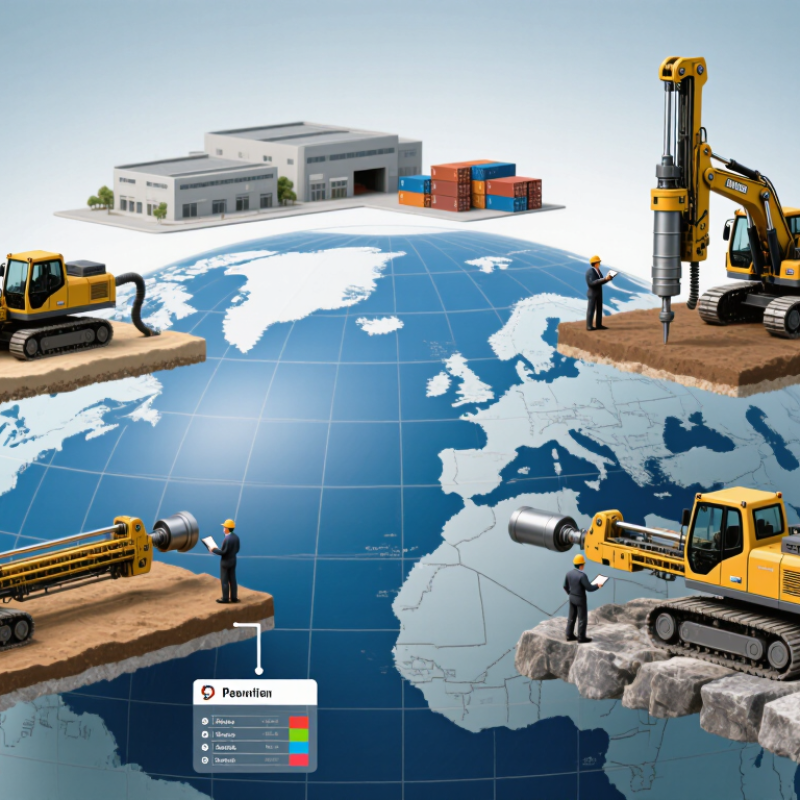
Define HDD Drill Suppliers by Rig Class, Tooling, and Global Service Scope
Top HDD Drill Suppliers for Global Buyers?
Horizontal directional drilling suppliers should be defined by rig class, tooling, and service reach, not catalog size. Small rigs suit short utility crossings and restricted urban sites. Mid-range rigs handle longer drives, while large rigs support deep installations and heavier product pipe. Grand View Research’s 2024 market outlook projects steady HDD equipment growth through 2030, driven by underground utility expansion and replacement work.
Tooling reveals practical competence. Ask about pilot bits, reamers, swivels, drilling fluids, locator systems, and rock tooling. ASTM F1962 guidance remains useful for polyethylene pipe installation design. A capable supplier should explain torque, pullback limits, bore geometry, and soil response using project evidence. Global service scope also matters. Check spare-parts coverage, technician response times, operator training, and local language support. Research and Markets’ 2024 HDD outlook identifies infrastructure investment as a major growth factor, but market reports cannot measure every supplier’s field reliability.
Tips: Request three completed project references in similar ground. Inspect a sample tooling kit. Confirm parts availability before signing. Ask for realistic production rates, not optimistic brochures. One overlooked detail is fluid management. Sandy soil, cobbles, and mixed fill can quickly change the plan. I have seen technically strong proposals weaken when maintenance support was vague. Supplier selection is still partly judgment, and that judgment should be documented.
Compare Suppliers Using Pullback, Torque, RPM, and Fluid-Flow Ratings
Global buyers often compare HDD drill suppliers by price. That approach can mislead. Pullback, torque, RPM, and fluid-flow ratings reveal operating capability more clearly. A 12,000-pound pullback rating may describe peak force, not continuous performance. Ask for both figures, duty-cycle limits, and test conditions. Also check whether the rating includes tooling, rods, and mud resistance. Small details matter.
Torque should match ground conditions and the planned bore diameter. High torque helps in dense clay, cobbles, and difficult reaming, but it can increase rod stress. RPM affects cutting speed, yet maximum RPM is not always useful. Many operations need controlled, low-speed rotation for steering and hole stability. Review torque at several RPM points, not only the headline maximum. Request service records and independent load-test documents where available.
Fluid-flow ratings deserve equal attention. Insufficient flow can reduce drilling efficiency, cool poorly, and leave cuttings in the bore. Compare pump flow, pressure, and usable flow at the tool, not just the pump outlet. Supplier support also matters, including spare-part access, operator training, and response time. I would still treat every chart cautiously because soil changes quickly. Laboratory numbers rarely mirror a wet, collapsing entry pit. A practical trial may expose weaknesses earlier than a polished brochure.
Top HDD Drill Suppliers for Global Buyers — Compare Suppliers Using Pullback, Torque, RPM, and Fluid-Flow Ratings | Supplier Reference | Typical HDD Class | Maximum Pullback
(kN) | Maximum Rotary Torque
(N·m) | Maximum RPM
(rpm) | Maximum Fluid Flow
(L/min) | Recommended Installation Scope | Buyer Focus |
| Supplier Reference A | Compact utility HDD | 45 | 1,800 | 220 | 75 | Short service connections, urban utility crossings, and small-diameter conduit installations | Transportability, low ground disturbance, and compact-site access |
| Supplier Reference B | Mid-range utility HDD | 133 | 5,420 | 230 | 189 | Water, gas, telecommunications, and medium-diameter pipeline crossings | Balanced pullback, torque, and drilling-fluid capacity |
| Supplier Reference C | Heavy-duty HDD | 267 | 13,558 | 220 | 379 | Longer crossings, larger utility bundles, and demanding mixed-soil formations | Higher torque reserve and stronger fluid circulation |
| Supplier Reference D | Maxi HDD | 890 | 81,000 | 150 | 757 | Large-diameter pipeline crossings, river crossings, and high-load product installation | Maximum pullback capacity, bore length, and formation control |
| Ratings shown are maximum published values for representative HDD equipment classes and are intended for preliminary supplier comparison. Actual performance depends on tooling, ground conditions, bore length, drilling-fluid properties, hydraulic settings, and machine configuration. Confirm the exact model datasheet before procurement. |
Technical reading guide: Pullback indicates the machine’s maximum linear force during pipe installation; rotary torque indicates available drilling and reaming force; RPM affects cutting speed and tooling control; fluid flow determines the available drilling-fluid circulation for bore cleaning, cooling, and soil conditioning.

.svg)


