| 1 | Material Quality | Consistency of acrylonitrile-butadiene rubber compounds, hardness, batch traceability, and compound identification. | Material certificate identifies NBR grade, hardness tolerance, batch number, and applicable ASTM or ISO test methods. | 15% | Test report and batch record |
| 2 | Dimensional Accuracy | Accuracy of O-rings, backup rings, wipers, oil seals, and other kit components against approved drawings. | Dimensions are inspected against ISO 3601, AS568, or customer-approved drawings where applicable. | 15% | Inspection report and samples |
| 3 | Temperature Capability | Suitability of the selected NBR compound for the specified operating and storage temperatures. | Typical NBR service ranges are commonly specified around -30°C to +100°C, with the exact range dependent on compound and application. | 10% | Compound data sheet |
| 4 | Fluid Compatibility | Resistance to mineral oils, hydraulic fluids, fuels, lubricants, and other media specified by the buyer. | Compatibility is verified using the actual fluid, temperature, pressure, and exposure time; NBR is generally suitable for many petroleum-based fluids but is not universally compatible. | 12% | Immersion test or compatibility data |
| 5 | Compression Set and Elasticity | Ability of the seal to maintain contact pressure after prolonged compression and thermal exposure. | Compression-set results should be reported using a defined method such as ASTM D395, including test temperature and duration. | 10% | Laboratory test report |
| 6 | Manufacturing and Inspection Controls | Control of mixing, molding, trimming, visual inspection, dimensional inspection, and nonconforming products. | Documented quality procedures aligned with ISO 9001 principles and defined acceptance criteria for each production stage. | 10% | Quality certificate and process records |
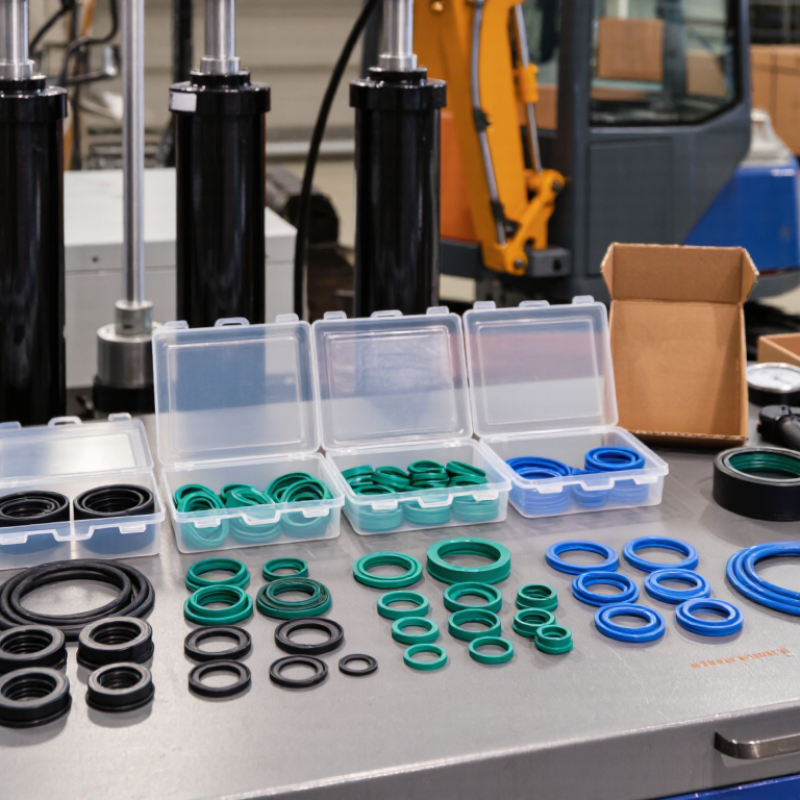
| 7 | Kit Completeness and Identification | Correct quantity, size, material, color, and component type in every repair or replacement kit. | Each kit should have a component list, part reference, quantity check, material designation, and lot traceability. | 8% | Packing list and final inspection record |
| 8 | Customization Capability | Ability to produce non-standard sizes, mixed-component kits, special hardness, colors, packaging, and labeling. | Supplier can provide drawing review, material selection, sampling, tooling support, and documented first-article approval. | 7% | Sample approval and technical proposal |
| 9 | Delivery and Supply Reliability | Production capacity, lead-time consistency, inventory planning, export documentation, and response to repeat orders. | Evaluation is based on documented lead times, capacity information, on-time delivery records, and order communication procedures. | 7% | Order history and delivery records |
| 10 | Packaging, Storage, and Compliance | Protection against ozone, sunlight, heat, contamination, deformation, and incorrect storage during shipment and warehousing. | Packaging and storage instructions should follow applicable seal-storage guidance, including ISO 2230 where relevant. | 6% | Packaging specification and compliance documents |

.svg)