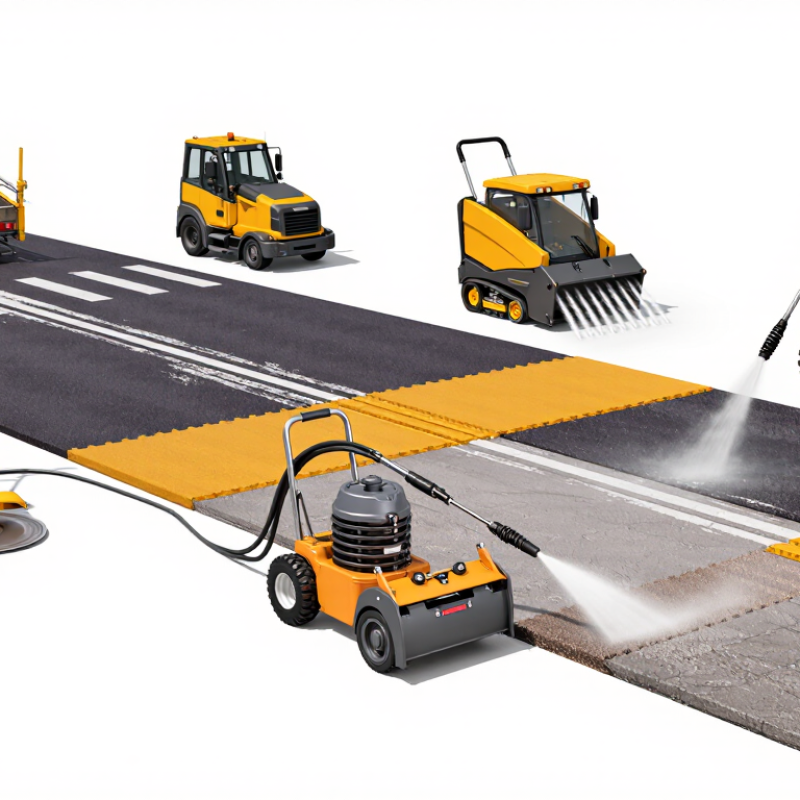
| Infrared heating equipment | Radiant heat warms the marking and, depending on the system and surface, the pavement beneath it. The softened material is then lifted or scraped away. | Thermoplastic markings and selected pavement-marking applications where controlled heating is appropriate. | Can soften material over a defined area without relying on chemical solvents; heat can help make thermoplastic easier to remove mechanically. | Heating alone usually does not collect or remove the material. Excessive heat may damage pavement or create fumes; follow equipment instructions and site-specific safety procedures. |
| Hot-air or thermal lance | Directs a focused stream of heated air to soften or loosen marking material, which is then removed with a scraper or other suitable tool. | Localized work, edges, and thermoplastic markings where careful, targeted heating is useful. | Offers localized heat and can be useful for small or irregular areas; does not require applying a chemical stripper. | Removal can be slow over long line lengths and still requires a separate collection method. Hot surfaces, ignition hazards, and fumes require appropriate controls. |
| Flame-based heating equipment | Uses a controlled flame to heat marking material so it can be scraped or otherwise removed. | Limited applications where the marking and pavement are compatible with the method and fire risks can be managed. | Can rapidly heat some materials and may soften thermoplastic for subsequent mechanical removal. | Open flame presents significant fire and burn risks and may scorch pavement or produce hazardous fumes. It is unsuitable near combustible materials and must only be used where permitted and safely controlled. |
| Solvent-based chemical stripper | A compatible chemical is applied to soften or loosen certain coatings; the residue is then scraped or collected according to the product instructions. | Selected paint or coating removal tasks, especially on surfaces and in settings approved by the stripper manufacturer. | Can work on some coatings without abrasive grinding and may be useful for small, controlled areas. | Effectiveness depends on the coating and substrate. Solvents may create exposure, ventilation, fire, and waste-disposal concerns; check the safety data sheet and local requirements. |
| Alkaline or caustic chemical stripper | A high-pH formulation acts on compatible coatings to loosen them for removal; application and dwell time depend on the specific product. | Coatings that the product specifically lists as compatible, subject to a small-area test and substrate approval. | May be effective on certain coating types and avoids using heat during the stripping step. | Caustic products can cause severe skin and eye burns and may affect some substrates. Containment, protective equipment, residue handling, and any required neutralization must follow product directions. |
| General selection and safety check | Identify the marking material and pavement first, then test a small area. Choose a method approved for both, protect nearby traffic and property, and plan how loosened material and chemical residues will be collected and disposed of. Follow equipment manuals, product labels, safety data sheets, and applicable local regulations. |

.svg)