Food Safety Insights

In Eagle’s Advanced Insights Blog, experts share their know-how by keeping you up-to-date with the latest trends to ensure your inspection equipment keeps your products safe. Eagle is an industry leader when it comes to performance and innovation, and we’ll share the news that’s important to you to enhance your quality assurance program.

Suggest topic you would like to see at:

sale@generalmachinery.org

Why Choose a Battery Energy Storage System?

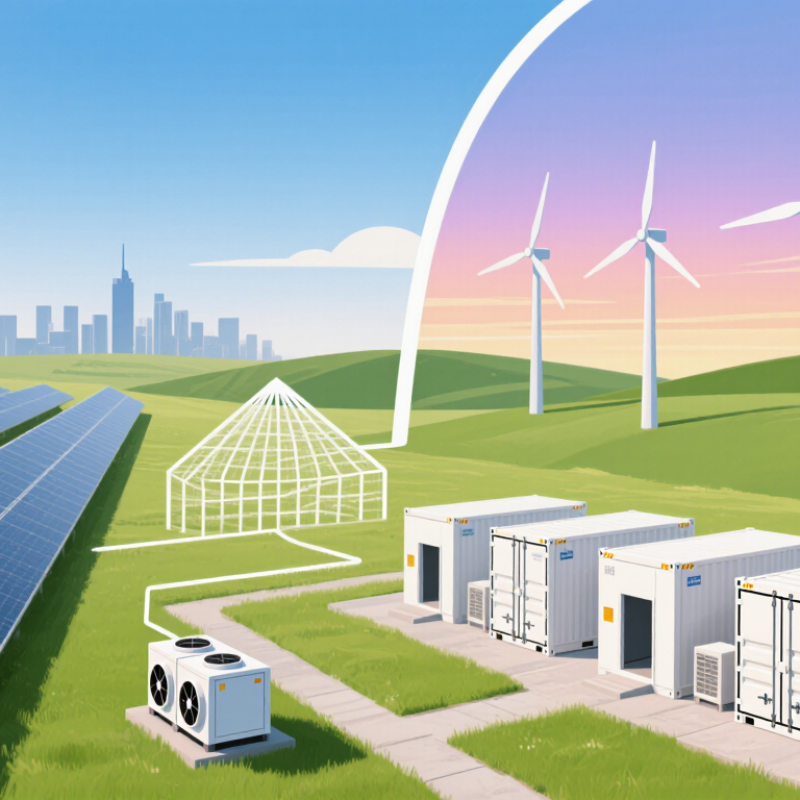
Why Choose a Battery Energy Storage System? This question now reaches beyond backup power. It concerns grid stability, renewable integration, operating costs, and energy resilience. A Battery Energy Storage System can store surplus electricity during sunny or windy hours. It can then discharge power when demand rises after sunset.

The International Energy Agency reported that global battery storage additions in the power sector more than doubled in 2023, reaching almost 42 GW. Its Batteries and Secure Energy Transitions report also identifies batteries as essential for renewable-heavy electricity systems. BloombergNEF reported strong growth in global stationary storage deployments during 2023. These figures show momentum, but they do not guarantee success. Project design still depends on tariffs, climate, fire protection, grid rules, and cycling requirements.

Real conditions matter. A system beside a solar farm may charge at noon and discharge during the evening peak. Its containers need thermal management, monitoring, maintenance access, and careful commissioning. Dr. Imre Gyuk, former director of the U.S. Department of Energy’s Energy Storage Program, stated, “Energy storage is the key to unlocking the full potential of renewable energy.” His observation remains practical, not merely promotional. Storage can improve flexibility, yet it cannot repair weak planning or poor installation. That limitation deserves attention. Choosing the right Battery Energy Storage System requires measurable objectives, transparent performance data, and independent technical review. The strongest decision begins with evidence, not excitement.

Why Choose a Battery Energy Storage System?

What Is a Battery Energy Storage System?

A Battery Energy Storage System, or BESS, stores electrical energy for use at a later time. It usually includes battery cells, inverters, thermal controls, sensors, and software. The battery stores direct current, while the inverter converts it into usable alternating current for buildings or equipment. In simple terms, it works like a managed energy reservoir.

A BESS can charge when electricity is plentiful or renewable power is available. It can discharge during peak demand, outages, or sudden changes in solar and wind production. For example, a small facility might charge batteries at midday, then use that stored energy after sunset. This can reduce demand charges and improve power stability. However, performance depends on battery chemistry, temperature, maintenance, and charging habits. Real-world results are not always as neat as a spreadsheet suggests.

Choosing a BESS also requires careful sizing. An oversized system may waste capital and floor space. An undersized system may stop supporting critical loads too soon. Professional design should examine load profiles, fire protection, ventilation, electrical connections, and expected battery life. Operators should review monitoring data regularly, not only during emergencies. A practical system needs clear operating limits, trained personnel, and a replacement plan. Batteries age. That detail is easy to overlook.

How Does Battery Energy Storage Work?

A battery energy storage system stores electricity for use when generation or grid supply changes. During charging, solar panels or the grid send electricity to a power conversion system. The converter changes alternating current into direct current for the battery cells. A battery management system monitors voltage, temperature, and state of charge. Small sensors matter. They help prevent unsafe operating conditions.

When electricity is needed, the process reverses. The battery releases direct current, and the converter produces alternating current for household or industrial equipment. Control software decides when to charge or discharge, using demand, energy prices, and system limits. For example, a system may charge at midday, then support lights and refrigeration after sunset. This can reduce peak demand and provide backup power during an outage, if configured correctly. Performance depends on capacity, power rating, installation quality, and temperature.

No battery stores every incoming kilowatt-hour. Energy is lost as heat during conversion and operation. Cells also gradually lose capacity, even with careful use. That limitation deserves attention. A qualified installer should check ventilation, fire protection, wiring, and local electrical requirements before commissioning. I would review the emergency shutdown procedure and maintenance records. Poor upkeep can undermine a sound design. Temperature control may also seem minor, but it strongly affects battery life.

What Benefits Does Battery Storage Provide?

Why Choose a Battery Energy Storage System?

Battery storage provides practical support when electricity demand changes quickly. During high-demand periods, a system can discharge stored power and reduce peak-grid purchases. It can also absorb surplus solar energy at noon, then supply electricity after sunset. The International Energy Agency reported that global utility-scale battery additions reached about 42 GW in 2023, more than doubling from 2022. This growth reflects a clear need for flexible power. Yet, the economics are not always tidy. Results depend on tariffs, cycling frequency, local weather, and battery degradation.

Storage also improves resilience during short outages and helps stabilize voltage and frequency. According to the IEA’s Batteries and Secure Energy Transitions report, battery storage capacity must expand sixfold by 2030 under its net-zero pathway. That target is ambitious. It also shows why storage is becoming part of modern energy planning, not merely a backup device. In real operations, control software and maintenance matter as much as battery size. A larger system may deliver less value if it cannot respond at the right moment.

Tips:

Compare daily load curves with tariff schedules before selecting capacity. Request round-trip efficiency, usable capacity, warranty conditions, and degradation assumptions. Include ventilation, thermal monitoring, emergency access, and end-of-life planning. Test backup performance under realistic loads. A battery that looks excellent on paper can disappoint during a cloudy week or repeated evening peaks. Recheck the model annually, because energy prices and operating habits change.

Which Applications Use Battery Energy Storage Systems?

Battery Energy Storage Systems are used wherever electricity timing matters as much as electricity supply.

In commercial buildings, they charge during low-demand hours and discharge during expensive peaks. A warehouse may reduce demand spikes when refrigeration compressors start together. Hospitals use storage for short-duration backup, supporting critical circuits while generators or utility power respond.

The system must separate life-safety loads from ordinary lighting and office equipment. That design detail is easy to overlook.

Solar and wind projects use batteries to shift renewable energy into evening demand. A solar farm can store midday output instead of curtailing it.

Wind projects may use storage to smooth sudden output changes and support grid frequency. Utilities also deploy larger systems for congestion relief, voltage support, and fast reserve capacity.

These applications require careful modeling of load profiles, weather, interconnection limits, and battery degradation. Real performance depends on controls, not cell capacity alone.

Remote clinics, islands, and construction sites use battery systems as microgrid assets. They can reduce diesel runtime, stabilize sensitive equipment, and provide silent power overnight.

Electric vehicle charging centers use storage to limit grid connection upgrades during simultaneous charging. Yet storage is not a universal fix. A poorly sized battery can cycle too often, lose capacity early, or fail to meet backup duration.

Field reviews should include thermal conditions, maintenance access, fire protection, and emergency procedures.

The difficult lesson is that the cheapest design may become unreliable when conditions change. Good engineering leaves room for uncertainty.

What Factors Matter When Choosing a Battery Storage System?

Why Choose a Battery Energy Storage System?

What Factors Matter When Choosing a Battery Storage System?

Choosing a battery storage system starts with the project’s real operating needs. Power rating controls how much equipment can run at once. Energy capacity determines how long it can operate. A four-hour system may suit daily peak shaving, but critical facilities may require longer duration. The International Energy Agency reported that global battery storage additions reached about 42 GW in 2023. Growth is rapid, yet every site has different demands.

Round-trip efficiency, degradation, safety, and warranty terms deserve close attention. The U.S. National Renewable Energy Laboratory’s 2024 cost analysis shows that storage economics depend heavily on cycle frequency, duration, and system lifetime. Ask for tested efficiency under realistic temperatures, not ideal laboratory conditions. Review usable capacity after degradation, too. That detail is easy to miss.

Safety needs practical inspection. Check thermal monitoring, fire protection, ventilation, emergency procedures, and installation standards. Location also matters: salt air, dust, heat, and flooding can shorten service life. A lower purchase price may create higher replacement costs later. It happens. Project owners should compare total lifecycle cost, expected revenue, maintenance, grid rules, and recycling arrangements. Reports provide useful assumptions, but assumptions can be wrong for a specific site. A careful decision leaves room for uncertainty.

Why Choose a Battery Energy Storage System? - What Factors Matter When Choosing a Battery Storage System?

Evaluation Factor Typical Data or Range Why It Matters Selection Guidance
Energy Capacity Measured in kWh or MWh; usable capacity is commonly lower than nominal capacity. Determines how long the system can supply loads or shift energy. Size the system using the required load, backup duration, and allowable depth of discharge.
Power Rating Measured in kW or MW; continuous and peak ratings may differ. Determines which loads can operate simultaneously and whether high-starting-current equipment can be supported. Check continuous output, short-term surge capability, and the starting requirements of motors and pumps.
Battery Chemistry Lithium iron phosphate (LFP) and nickel-manganese-cobalt (NMC) are common lithium-ion options. Chemistry affects safety characteristics, energy density, operating temperature, cost, and service life. LFP is often selected for stationary storage because of its thermal stability and cycle durability; NMC can offer higher energy density.
Round-Trip Efficiency Approximately 80%–95% for many complete battery-system cycles, depending on system design and operating conditions. Higher efficiency reduces energy losses and improves the value of solar shifting or tariff arbitrage. Compare AC-to-AC efficiency at the system level rather than battery-cell efficiency alone.
Depth of Discharge Many lithium-ion systems permit approximately 80%–95% usable depth of discharge, subject to manufacturer limits. A higher usable percentage provides more energy from the installed capacity. Use the guaranteed usable capacity and degradation assumptions, not only the nominal battery size.
Cycle Life Stationary lithium-ion systems are commonly specified for several thousand cycles; actual life depends on temperature, discharge depth, and charging power. Cycle life affects long-term capacity retention and replacement costs. Review cycle-life test conditions and the remaining-capacity guarantee at the stated end of life.
Response Time Power electronics can respond in milliseconds; complete backup transfer may take longer depending on the architecture. Fast response supports frequency regulation, power-quality control, and short interruptions. Confirm both inverter response time and the transfer time required by protected loads.
Operating Duration Common applications range from less than 1 hour to approximately 4 hours; longer durations require additional energy capacity. Duration determines whether the system is optimized for backup, peak shaving, renewable shifting, or grid services. Calculate duration as usable energy capacity divided by the actual load, while accounting for conversion losses.
Thermal Management Operating limits vary by system; many lithium-ion systems perform best near moderate ambient temperatures and may require heating or cooling. Temperature influences available power, efficiency, degradation, and safety. Evaluate the site climate, enclosure rating, HVAC energy use, ventilation, and temperature monitoring.
Safety and Protection A complete system should include battery-management systems, over-current protection, thermal monitoring, isolation, and emergency shutdown functions. Protection systems help detect abnormal voltage, current, temperature, and insulation conditions. Verify compliance with applicable electrical, fire, installation, and grid-interconnection requirements.
Scalability Systems may be modular, allowing additional battery racks or power-conversion units to be installed as demand grows. Scalability reduces the risk of oversizing the initial installation. Check expansion limits, communication compatibility, spare capacity, and whether future modules must match the original configuration.
Power Conversion System The inverter or power-conversion system manages DC-to-AC and AC-to-DC conversion, controls, and grid interaction. Its rating and control functions affect efficiency, power quality, backup capability, and grid compatibility. Confirm voltage, phase configuration, overload capability, islanding protection, and grid-support functions.
Monitoring and Control Systems commonly provide state-of-charge, state-of-health, temperature, alarms, power-flow, and historical-performance data. Accurate monitoring supports preventive maintenance and verifies energy savings. Look for secure remote access, open communication protocols, data export, alerts, and role-based controls.
Installation Footprint Footprint varies with energy capacity, power rating, enclosure design, clearances, and access requirements. Space and site constraints can affect project cost and feasibility. Assess floor loading, weather exposure, service access, fire separation, cable routes, and noise limits.
Total Cost of Ownership Includes equipment, engineering, installation, interconnection, maintenance, software, electricity losses, and eventual replacement. The lowest purchase price does not necessarily provide the lowest lifetime cost. Compare cost per usable kWh, expected annual throughput, degradation, efficiency, maintenance, and end-of-life handling.
Application Fit Typical uses include backup power, peak shaving, renewable-energy shifting, demand-charge reduction, frequency response, and microgrids. Each application requires a different balance of power, energy, response time, cycling frequency, and controls. Define the primary operating objective before selecting the battery size, inverter rating, and control strategy.

Note: Values shown are general industry ranges for planning purposes. Actual performance depends on system design, operating profile, ambient conditions, installation requirements, and applicable standards.

Any Questions? We Are Here for You

Contact Us

Contact Us

Request information

Ask us a question
Service Support

Service Support

Available 24 hours a day, 7 days a week.

Get in Touch
Find a representative

Find a representative

Contact your local representative

View Locations