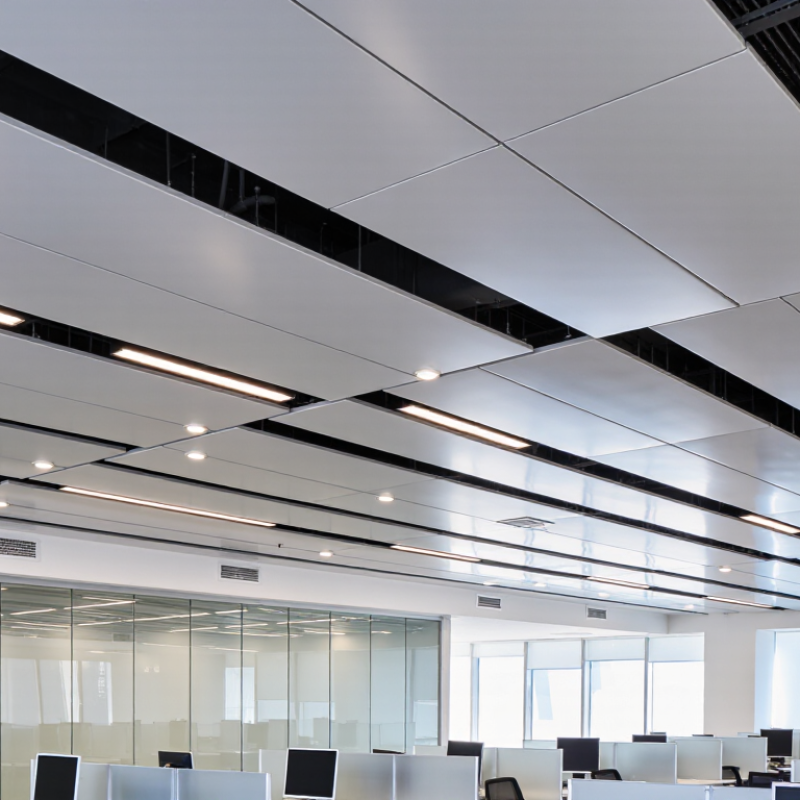
| Material Composition | Panels are manufactured from aluminum sheet or aluminum alloy, commonly using formed, folded, clipped-in, or lay-in designs. | Provides a rigid ceiling surface with a relatively low material weight compared with many mineral or steel-based ceiling products. | Commercial interiors, transportation facilities, public buildings, and residential projects. |
| Corrosion Resistance | Aluminum naturally forms a thin oxide layer that helps protect the underlying metal. Additional coatings can provide further surface protection. | Suitable for locations where humidity, condensation, or routine cleaning may occur. | Bathrooms, kitchens, swimming-pool surroundings, hospitals, food-service areas, and coastal buildings. |
| Moisture Performance | Aluminum itself does not absorb water and will not swell like moisture-sensitive fiberboard or some wood-based materials. | Helps maintain panel dimensions and appearance in damp indoor environments when the supporting system is correctly designed. | Washrooms, locker rooms, indoor pools, entrances, basements, and covered outdoor areas. |
| Fire Behavior | Aluminum is non-combustible as a metal; however, the complete ceiling assembly, including coatings, cores, insulation, and suspension components, must be assessed as a system. | Supports the use of metal ceiling systems in projects with strict fire-safety requirements, subject to applicable testing and building codes. | Airports, hospitals, schools, offices, shopping centers, and public circulation spaces. |
| Durability | Aluminum panels resist rot, insect damage, and many forms of surface deterioration. Performance depends on alloy, coating, installation, and maintenance. | Can provide a long service life with fewer replacement requirements than less durable interior finishes. | High-traffic corridors, retail stores, transport hubs, elevator lobbies, and institutional buildings. |
| Cleaning and Hygiene | Smooth coated or anodized surfaces are generally easy to wipe and can be maintained with routine cleaning methods recommended by the panel supplier. | Helps support cleanable interior surfaces and reduces the accumulation of dirt on the visible ceiling finish. | Healthcare facilities, laboratories, commercial kitchens, restaurants, schools, and food-processing support areas. |
| Design Flexibility | Panels are available in different shapes, sizes, perforation patterns, surface finishes, colors, and linear or modular layouts. | Allows the ceiling to combine visual design with lighting, ventilation, sprinkler, and inspection access requirements. | Corporate offices, hotels, retail interiors, cultural venues, airports, and modern residential spaces. |
| Acoustic Options | Perforated aluminum panels can be combined with acoustic fleece or other sound-absorbing backing materials. | Can improve sound absorption while preserving the appearance and cleanability of a metal ceiling system. | Open-plan offices, classrooms, conference rooms, libraries, restaurants, and transport terminals. |
| Maintenance Access | Clip-in, lay-in, and removable panel systems can be designed to provide access to services above the ceiling. | Simplifies inspection and maintenance of electrical, plumbing, air-conditioning, and fire-protection equipment. | Offices, hospitals, shopping centers, data-support areas, hotels, and public buildings. |
| Weight and Installation | Aluminum panels are generally lightweight, but the final installed weight includes the suspension grid, hangers, trims, insulation, and accessories. | May help reduce handling effort and support efficient installation when the structure and suspension system are properly engineered. | Renovation projects, suspended ceilings, large commercial spaces, and buildings with limited ceiling void access. |
| Recyclability | Aluminum can be recycled repeatedly when it is collected and separated through suitable recycling systems. | Supports material-recovery goals and can contribute to resource-efficiency strategies during renovation or demolition. | Green-building projects, commercial developments, public infrastructure, and refurbishment programs. |
| Outdoor Suitability | Exterior use requires products, coatings, fixings, drainage details, and wind-load design intended for outdoor exposure. | Can be used in protected exterior locations when the complete system is specified for weather and environmental conditions. | Canopies, covered walkways, station platforms, entrance soffits, balconies, and sheltered public areas. |

.svg)