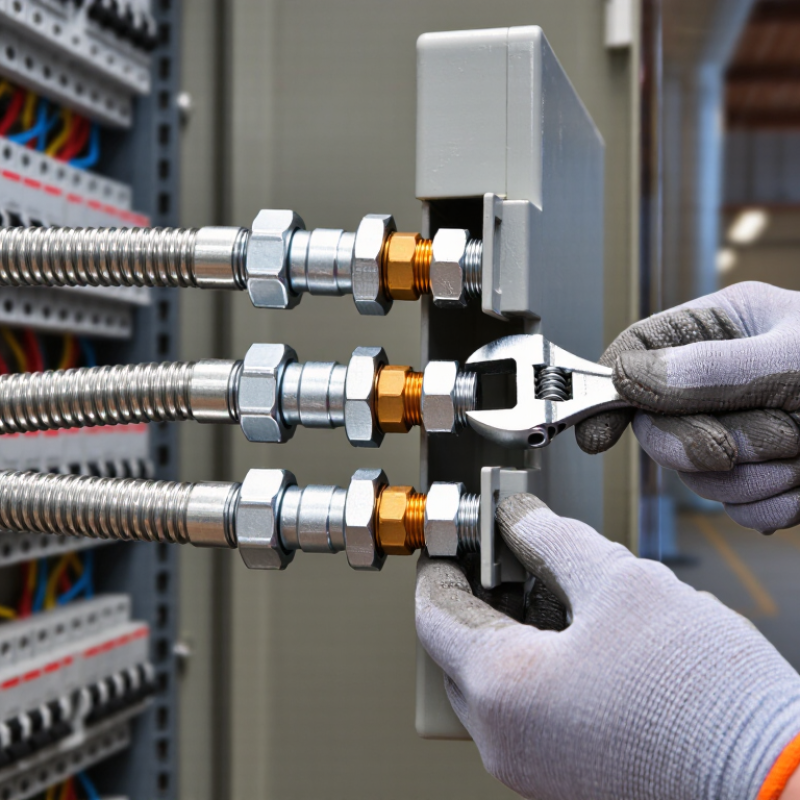
| Primary conduit type | Electrical Metallic Tubing (EMT), commonly manufactured from galvanized steel | The connector joins the EMT to another conduit length, electrical box, enclosure, or fitting and maintains mechanical continuity. | Provides a compact, durable raceway system for exposed or concealed wiring installations. |
| Common connector types | Set-screw connectors; compression connectors; raintight compression connectors where the installation requires a sealed connection | Set-screw models secure the tubing with one or more tightening screws. Compression models use a gland, nut, or sealing ring to grip and seal the tubing. | Allows the fitting style to be matched to indoor, damp, wet, commercial, industrial, or outdoor conditions. |
| Nominal EMT size | Common trade sizes include 1/2, 3/4, 1, 1-1/4, 1-1/2, 2, 2-1/2, 3, 3-1/2, and 4 inches | The connector must match the exact nominal EMT trade size; conduit and fitting dimensions are not selected by nominal size alone across different systems. | Standardized trade sizes simplify material planning and support repeatable installation practices across projects. |
| Selected outside diameters | 1/2 in: 0.706 in (17.9 mm); 3/4 in: 0.922 in (23.4 mm); 1 in: 1.163 in (29.5 mm); 2 in: 2.197 in (55.8 mm); 4 in: 4.500 in (114.3 mm) | The connector’s entry and gripping area are engineered for the corresponding EMT outside diameter and wall profile. | Accurate size matching reduces loose joints, difficult assembly, and incompatible fitting combinations. |
| Mechanical connection | Tubing is inserted into the connector and secured according to the fitting design and installation instructions. | The fitting resists pullout and helps maintain alignment between the EMT and the connected box, enclosure, or raceway section. | Improves structural reliability where conduit is exposed to vibration, movement, or routine maintenance. |
| Electrical bonding path | A listed metal connector, properly tightened and installed with compatible EMT, can form part of the equipment grounding and bonding path where permitted by the applicable electrical code. | Metal-to-metal contact and the connector’s bonding design help maintain continuity across conduit joints and terminations. | Can reduce the need for a separate grounding conductor in installations where local rules permit the metallic raceway to serve that function. |
| Environmental selection | Set-screw fittings are generally used in dry locations; compression or raintight fittings are selected for damp, wet, or outdoor locations when specifically listed for that use. | Sealing components and compression hardware limit moisture entry at the conduit termination. | Supports safer and more durable installations in changing climates and demanding operating environments. |
| Material and corrosion considerations | Galvanized steel is common for general installations; corrosion-resistant finishes or compatible materials may be required in corrosive atmospheres. | The connector finish and material must be compatible with the EMT, enclosure, surrounding environment, and any dissimilar metals in contact. | Helps extend service life and reduces the risk of corrosion-related loss of mechanical or electrical continuity. |
| Installation verification | Check size, connector listing, enclosure type, tightening method, conduit engagement, continuity, and local code requirements. | Correct installation creates a secure termination without damaging the tubing, threads, sealing ring, or connector body. | Improves consistency across international projects where electrical codes, approval marks, and installation methods may differ. |
| Applicable standards | Common North American references include ANSI C80.3 for EMT and UL 514B for conduit, tubing, and cable fittings; other regions may require different national or international standards. | The connector should carry the approval or marking required for the destination market and intended location. | Makes project specifications easier to audit while avoiding assumptions that one approval applies worldwide. |

.svg)