How to Choose Fruit and Vegetable Processing Equipment?
Choosing fruit and vegetable processing equipment starts with the product, not the machine catalogue. A firm apple, ripe tomato, and leafy spinach each place different demands on washing, cutting, and handling. Small details matter. A delicate berry may bruise under pressure, while a root vegetable may need dependable peeling and trimming before it reaches the next stage.
Before comparing models, define the expected hourly output, product range, and finished cut or texture. Then map each processing step, from washing and sorting to blanching, drying, or packaging. A line that looks efficient on paper may struggle during frequent changeovers or with produce that varies in size and ripeness. That is easy to overlook. Ask suppliers for specifications, cleaning instructions, maintenance requirements, and references from facilities processing similar products. If possible, test representative produce under realistic operating conditions. A showroom demonstration alone may not reveal jams, product loss, or difficult cleaning points.
Food-contact materials, accessible surfaces, and straightforward sanitation procedures deserve close attention. So do water and energy use, spare-part availability, operator training, and the space required around the equipment. Capacity claims should be checked against the actual product and process; a high nominal rate is not always a useful production rate. There is no universal best choice. The right system balances product quality, throughput, labor, maintenance, and future flexibility. Some estimates will remain uncertain until trials expose them. That uncertainty is worth recording, rather than hiding behind a polished specification sheet.
Identify the Product Types and Processing Goals
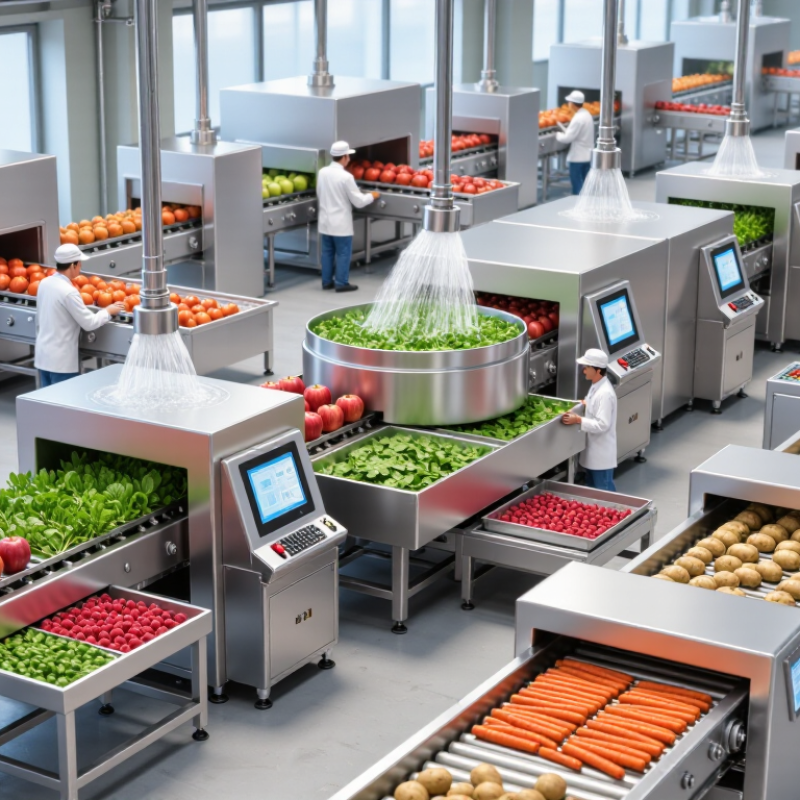
Start by listing each product and its condition at intake: whole, cut, leafy, firm, or delicate. A leafy-green line may need gentle washing, dewatering, and rapid cooling. Apples may require grading and cutting, while carrots often need peeling and slicing. These differences affect conveyor design, wash-water handling, cutting tools, and cleaning time. A machine that handles one crop well may bruise another.
Tips: Write down the intended output before requesting equipment quotes. Include target kilograms per hour, cut size, pack format, and expected operating hours. Test the most delicate product, not just the easiest one. Small trials can reveal bruising or clogging that a brochure will not.
Then clarify the processing goal: fresh-cut preparation, freezing, drying, puréeing, or juice production. Each route calls for different steps and controls. FAO’s 2023 SDG progress report estimated that 13.2% of food was lost between harvest and retail in 2021; fruits and vegetables had the highest reported loss rate, at 25.4%. This is a strong reason to assess yield and trim loss, though the figures do not predict results for any single plant. Compare usable output, water use, and cleaning downtime during a trial. The cheapest line may not be the least costly to run.
How to Choose Fruit and Vegetable Processing Equipment?
Identify the product type and processing goal. These example process routes show the number of core operations to plan for—not a universal equipment requirement.
Example routes: Fresh-cut fruit: wash, cut, dry, package. Frozen vegetables: wash, blanch, cool, freeze, package. Canned fruit: wash, peel or pit, fill, exhaust and seam, retort. Fruit juice: wash, extract, filter, pasteurize, fill.
Use the route as a starting point; choose equipment based on the product’s characteristics, desired shelf life, food-safety requirements, and packaging format.
Map Each Processing Stage to the Required Equipment
Map each processing stage before comparing equipment. At receiving, use inspection tables, scales, and sampling tools to reject bruised or overripe produce. FAO’s 2019 State of Food and Agriculture estimated that about 14% of food is lost between harvest and retail; fruits and vegetables had the highest loss rate, around 25%. That makes gentle handling more than a cosmetic concern.
Washing needs vary. Leafy greens may require flumes and dewatering, while firm roots can tolerate rotary or brush washers. Sorting belts help remove defects before peeling or cutting, when poor-quality pieces can slow the line. Match cutters to the product’s target size, then check whether blanching, pulping, or pressing is actually needed. Not every product needs every step. Extra machinery can add cleaning time and product damage.
At each stage, compare hourly throughput with the next machine’s capacity; a fast cutter is wasted if the washer becomes a bottleneck. Check contact surfaces, drainage, access for cleaning, and changeover time during a site trial. Small details matter. A wet floor or awkward rinse point can disrupt a shift. These choices are rarely perfect on paper, so test real produce across different sizes and ripeness levels before setting the final line layout.
Assess Capacity, Food Safety, and Material Compatibility
A processing line should match the amount of produce you can prepare consistently, not just a peak estimate. Compare rated capacity with your busiest realistic shift. Washing, peeling, cutting, and changeovers can all slow the line. Leave room for those pauses. A machine that runs near its limit may create queues of wet produce and uneven feed rates. Small details matter.
Food safety depends on how easily equipment can be cleaned and inspected. Look for smooth product-contact surfaces, accessible joints, and designs that avoid trapped pulp or standing water. Ask how parts are removed and reassembled, then check whether routine cleaning can reach belts, blades, and drains. A polished surface alone does not guarantee hygienic operation. Staff still need clear procedures, suitable cleaning tools, and enough time between runs.
Material compatibility deserves close attention. Acidic fruit, salty wash water, and frequent cleaning can affect metals, seals, and coatings differently. Confirm that product-contact materials suit your produce and cleaning chemicals, and inspect wear points where cut edges or seeds may cause abrasion. For example, citrus juice can behave differently from leafy greens during processing and cleanup. I have seen specifications look convincing on paper; the actual cleaning routine can expose awkward gaps. That trade-off deserves review. Test representative produce and cleaning steps before settling on a configuration.
Verify Supplier Support, Compliance, and Maintenance Needs
A polished brochure is not support. Ask who will commission the line, train operators, and respond when a washdown sensor fails at 2 a.m. Get response times, service coverage, and spare-part lead times in writing. Ask for manuals, maintenance schedules, and a parts list before purchase. Check that wear parts are available locally or can be shipped quickly. A low purchase price can become costly if a small seal stops a full shift.
Compliance needs evidence. Request documentation for food-contact materials, guarding, electrical safety, and cleaning procedures, then confirm requirements for your destination market. FAO’s 2023 SDG progress reporting estimated that 13.2% of food was lost globally between harvest and retail during 2016–2021. That figure does not prove equipment alone prevents losses, but it shows why reliable processing matters. During a factory acceptance test, inspect hard-to-reach belts, drain points, and product-contact joints. Ask operators to test cleaning and changeover steps, not just production speed. I would also check whether maintenance tasks fit the skills and tools already available on site. That detail is easy to overlook. A supplier’s clear answer—and documented proof—matters more than a confident promise.

.svg)