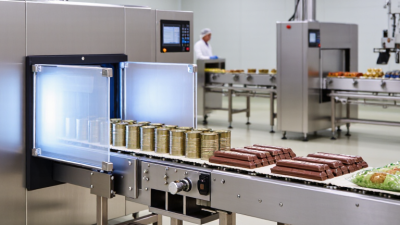
| Packaged-product conveyor system |
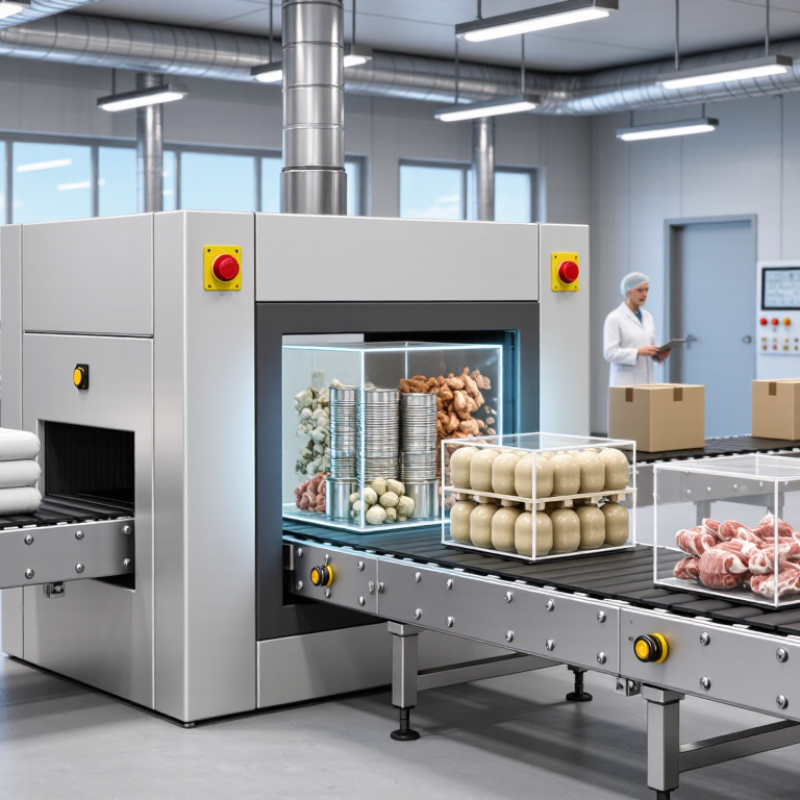
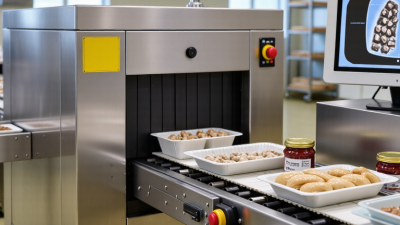
Sealed cartons, jars, cans, trays, pouches, and wrapped products on a production conveyor. |
Product passes through an X-ray inspection tunnel. A reject device can remove suspect packs; reject confirmation and a secure reject bin may be included. |
Can detect many dense contaminants, including metal, glass, stone, and some mineral or calcified material. Detection depends on contaminant size, density, position, product composition, and package geometry. |
May be designated as a CCP or another control measure when the site’s hazard analysis determines it is essential for controlling a significant physical hazard. The designation is site-specific. |
Validate performance using representative products and test pieces at relevant positions. Check line speed, pack spacing, product orientation, reject timing, reject confirmation, and procedures for rejected packs. |
| Small-pack, high-throughput conveyor system |
Small snack packs, confectionery, sachets, and other lightweight or closely spaced retail packs. |
Configured for smaller product dimensions and faster or more closely spaced presentations, subject to the equipment and line design. |
May help identify dense foreign material in small packs. Small contaminant size, overlapping products, variable pack presentation, and product density can affect detection. |
Can support a defined physical-hazard control step when supported by the hazard analysis, validated limits, monitoring, and corrective-action procedures. |
Test with the smallest and most challenging products, at the fastest intended operating conditions. Confirm that rejects are traceable to the correct pack and that alarms and reject checks are recorded. |
| Bulk or free-fall system |
Loose products such as grains, nuts, dried fruit, frozen pieces, and other bulk foods, where the system is suitable for the product flow. |
Product is inspected while moving through a controlled free-fall path; a separation or reject mechanism diverts detected material and, where applicable, affected product. |
Can be suitable for dense contaminants in loose product. Product depth, flow consistency, clumping, moisture, and particle overlap influence inspection results. |
May be considered as part of a process control measure for physical hazards. Define how affected product is isolated and how the cause of a detection is investigated. |
Assess product-flow stability, inspection coverage, reject effectiveness, and the handling of material around a detection. Validate with the actual product and operating flow, not only an empty-line test. |
| Pipeline or pumped-product system |
Pumpable foods such as sauces, purees, liquid products, and some pastes, when a compatible hygienic system is available. |
Product is inspected in a purpose-designed pipe or product stream. The installation must suit the product’s flow, pressure, temperature, and cleanability requirements. |
Potentially useful for dense contaminants in a flowing product. Product composition, air bubbles, flow variation, and system geometry can affect results; suitability must be confirmed for each application. |
Can form part of a physical-hazard control measure if the hazard analysis supports it and monitoring, deviation response, and verification are documented. |
Confirm hygienic design, clean-in-place compatibility where required, operating limits, detection response, and how product is diverted or held following an alarm. |
| Large-format or heavy-duty conveyor system |
Large packs, bulkier products, multi-component packs, or products presented in formats that require a larger inspection aperture. |
Designed around the required product opening and conveyor arrangement. Larger product dimensions or greater product depth may affect inspection performance. |
May inspect larger formats for dense foreign material, but a larger aperture or thicker product does not guarantee the same sensitivity as a smaller, thinner product. |
May be selected for a hazard-control step where the process-specific hazard analysis identifies a significant physical hazard and the control is validated. |
Test the thickest, densest, and most challenging product presentations. Confirm required sensitivity across the full inspection area and assess conveyor, reject, and guarding arrangements. |
| Combination inspection line |
Lines requiring X-ray inspection together with checks such as checkweighing, vision inspection, or package-integrity testing. |
Two or more inspection functions are integrated or sequenced. Each function has its own purpose, setup, and performance checks. |
X-ray inspection addresses suitable dense foreign-material hazards; other inspection technologies may address different risks. One technology should not be assumed to replace another without evidence. |
Each control measure should be justified in the hazard analysis. Identify monitoring responsibilities and corrective actions for each function and for line-level failures. |
Confirm that combined equipment does not compromise access, line speed, reject accuracy, or verification. Keep separate records for each control function where needed. |

.svg)